22 Famous Baseball Players Proudly From Indiana
Meet 22 famous Indiana-born baseball stars whose skills, awards, and impact on MLB have earned them national recognition.
Aug 16, 202515.9K Shares212.9K Views
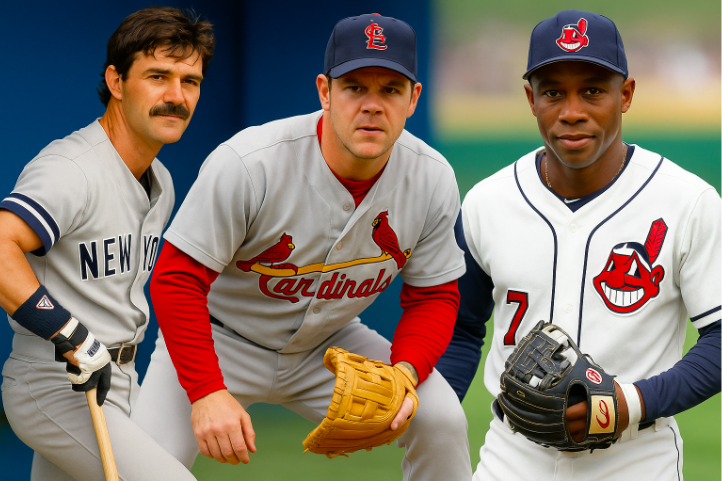
Indiana has a proud tradition in baseball, producing some of the sport’s most respected and talented athletes. From small-town beginnings to national fame, many players from the Hoosier State have made a lasting impact on Major League Baseball. These athletes are known not only for their impressive skills on the field but also for their dedication, work ethic, and contribution to the game’s history.
This article highlights 22 famous baseball players who were born in Indiana and went on to build remarkable careers in professional baseball. Whether they earned All-Star titles, pitched perfect games, or became Hall of Famers, each of these players has a unique story that reflects Indiana’s strong baseball legacy.
Babe Adams
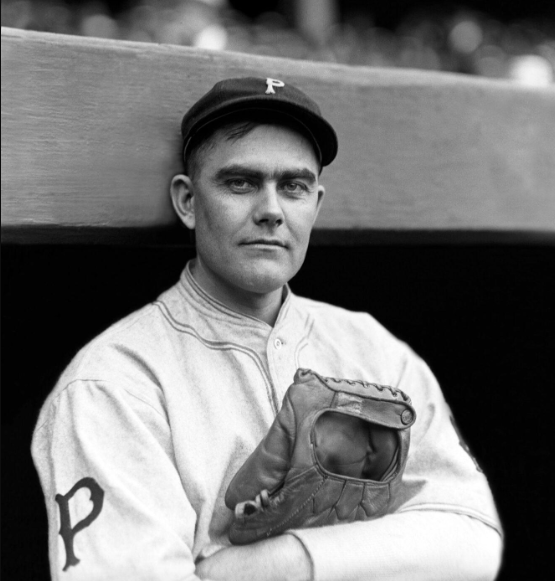
Babe AdamsBorn May 18, 1882, in Tipton, Indiana, Adams moved with his family to Mount Moriah, Missouri, in 1898. There, he played with local youth teams and practiced his pitching arm hunting and throwing rocks against his father’s barn. Spotted by a scout in 1904, he began his professional path with the Parsons Preachers in 1905.
Adams debuted in MLB on April 18, 1906, with the St. Louis Cardinals but played only briefly before his contract was sold to the Pittsburgh Pirates in 1907. His rookie season in 1909 was legendary: he went 12–3 with a 1.11 ERA, then won three complete games in the World Series, capping it with a shutout in Game 7, becoming the first rookie ever to win a Game 7. That year, he earned his nickname “Babe,” reportedly from admiring female fans during his 1908 minor-league stint in Louisville. He played mostly for Pittsburgh through 1926, including 20-win seasons in 1911 and 1913. In 1914, he pitched a remarkable 21 inning complete game without issuing a single walk, a modern record.
Over his career, Adams posted a 194–140win–loss record, a 2.76 ERA, 1,036 strikeouts, and a 1.09 WHIPin 2,995 ⅓ innings. He also excelled as a hitter for a pitcher, with a .212 batting average (3 home runs, 75 RBIs), and was recognized for elite control: just 1.29 walks per nine innings, the 20th century low mark. He won two World Series (1909, 1925). There’s no Hall of Fame induction, though supporters have nominated him. Known for his control, curveball and fastball mix, he remained effective well into his 40s and was admired for taking things easy on the mound.
After retiring in 1926, amid a dispute involving criticism of manager Bill McKechnie, Adams farmed in Missouri, managed in the minors, and worked as a reporter during World War II and the Korean War. He died of throat cancer on July 27, 1968, in Silver Spring, Maryland, aged 86.
Scott Rolen
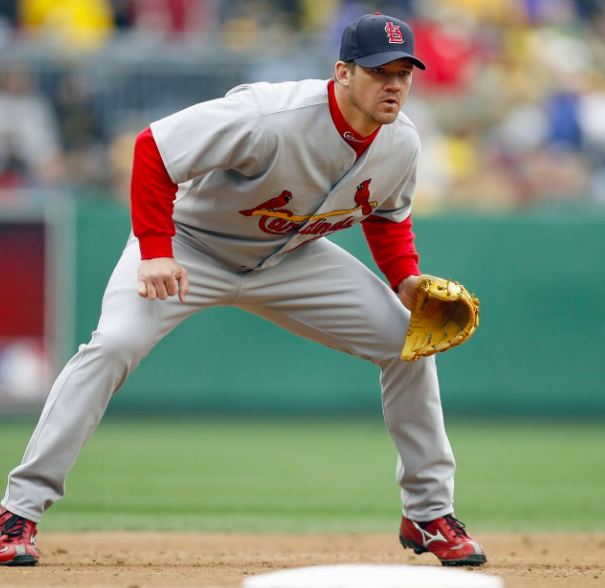
Scott RolenBorn April 4, 1975, in Evansville, Indiana, Rolen grew up in Jasper where he excelled in both baseball and basketball. He was named Indiana Mr. Baseball in 1993 and also earned a scholarship offer for basketball, but opted to sign with the Philadelphia Phillies after being drafted in the second round that year.
Rolen progressed quickly through the minors and debuted in MLB on August 1, 1996, with the Phillies, becoming their starting third baseman. After being named NL Rookie of the Year in 1997, he won his first Gold Glove in 1998. A trade to the St. Louis Cardinals in July 2002 marked the prime of his career: he produced a .314 batting average, 34 home runs, and 124 RBIs in 2004, helped to the 2004 NL pennant-clinching homer, overcame a shoulder surgery in 2005, and contributed to the 2006 World Series championshipwith a .421 Fall Classic batting average. Later stints included the Blue Jays and Cincinnati Reds, where he hit his 300th career home run in 2010 and earned his eighth Gold Glove.
Over his 17-yearcareer, Rolen played for four teams, recording a .281 batting average, 2,077 hits, 316 home runs, and 1,287 RBIs. He was a 7-time All-Star, 8-time Gold Glove winner, and earned a 2002 Silver Slugger, with a career OPS of .855 and .364 on-base percentage. Rolen was known as an elite defensive third baseman, praised for his strong arm, sure hands, and ability to make tough plays routine.
Rolen’s legacy includes being selected to the Baseball Hall of Fame in 2023with 76.3% of the vote on his sixth ballot, recognition of his status as one of the best third basemen ever. His influence extended beyond stats, he was respected for his professionalism, preparation, and team-first play. Off the field, he founded the Enis Furley Foundationin 1999 to support children in need and, in 2018, became the Director of Player Development at Indiana University baseball.
Kenny Lofton
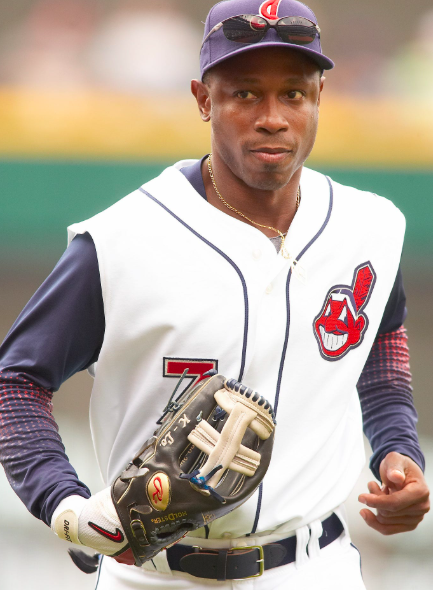
Kenny Loftonwas born on May 31, 1967, in East Chicago, Indiana, and was raised by his grandmother, Rosie Person, after his mother left. His early life was marked by financial hardship. Lofton weighed just 3 lb at birth and grew up in poverty, while his grandmother, who was losing her eyesight, cared for him without relying on welfare. He excelled at Washington High School in both baseball and basketball, earning all-state honors. Lofton attended the University of Arizona on a basketball scholarship, playing on a team that reached the 1988 Final Four. He tried out for Arizona’s baseball team during his junior year and was drafted by the Houston Astros in the 17th round of the 1988 MLB draft, all while completing his degree in studio production.
Lofton debuted in the majors on September 14, 1991, with the Astros before being traded to the Cleveland Indians in early 1992. Over his 17-year career (1991 to 2007), he played for 11 teams but is best known for his time with Cleveland. He became a six-time All-Star (1994 to 1999) and won four Gold Glove awards (1993 to 1996) as a stellar center fielder known for his speed and defense. Season highlights include leading the American League in stolen bases for five straight years (1992 to 1996), topping the league in hits in 1994, and holding the Cleveland single-season stolen-base record (75 in 1996).
Lofton retired in 2007 with an impressive .299 batting average, 2,428 hits, 130 homeruns, 781 RBIs, and 622 stolen bases, ranking 15th on MLB’s all-time steals list. He was also recognized for his high on-base skills (.372 OBP), speed on the bases, and elite defense, considered one of the best bunt performers and fastest players of the 1990s. Despite accumulating 68.7 WAR, he did not enter the Baseball Hall of Fame after receiving just 3.2% of votes in his lone ballot year.
Off the field, Lofton founded FilmPool, Inc., a film production company, and later worked in sports broadcasting and youth-oriented charitable efforts. His legacy includes inspiring fans with his electrifying defense, base-stealing prowess, and professionalism on and off the field. His impact endures as he remains a favorite among fans and pundits, who continue to debate his Hall of Fame candidacy.
Don Mattingly
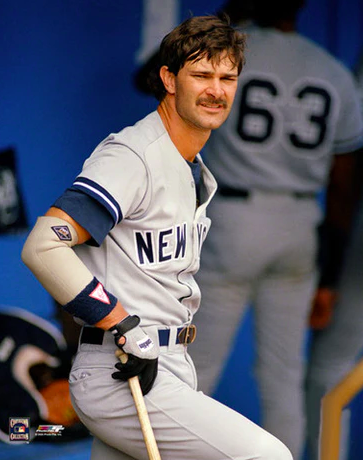
Born April 20, 1961, in Evansville, Indiana, Don Mattinglywas raised in the city and attended Reitz Memorial High School, where he stood out in baseball. He was drafted by the New York Yankees in the 19th round of the 1979 MLB draft and began his minor league career with strong performance, hitting .332 with 37 homers and 346 RBIs over 500 games from 1979 to 1983 with the Oneonta Yankees, Greensboro Hornets, Nashville Sounds, and Columbus Clippers.
Mattingly debuted in MLB on September 8, 1982, with the Yankees and played his entire 14-season career through 1995 for them. He was a six-time All-Star (1984 to 1989) and earned nine Gold Gloves, three Silver Slugger awards, and the American League MVP in 1985. His peak years from 1984 to 1989 saw standout seasons like 1985 where he hit .324 with 35 home runs and 145 RBIs, and 1987 when he set MLB records with six grand slams and a streak of eight consecutive games with a home run. He missed parts of later seasons due to a back condition but still finished with a .307 batting average, 2,153 hits, 222 home runs, 1,099 RBIs, and .829 OPS.
Mattingly was known as a left-handed first baseman with strong defense (a .996 fielding percentage), consistent hitting, leadership, and his trademark mustache made him iconic. His career was marked by timing, though personally excellent, the Yankees did not win a World Series during his tenure; he appeared only in the 1995 ALDS, where he hit .417 in five games.
Mattingly has not been elected to the Baseball Hall of Fame, receiving a peak of 28.2% of votes on his first ballot and remaining a candidate via the Contemporary Baseball Era Committee. After retiring as a player, he served as Yankees hitting coach (2004 to 2007), Dodgers coach/manager (2008 to 2015), and Marlins manager, winning the NL Manager of the Year in 2020. He later joined the San Diego Padres and served as advisor for the Nashville Stars, and his number 23 was retired by the Yankees in 1997.
Gil Hodges
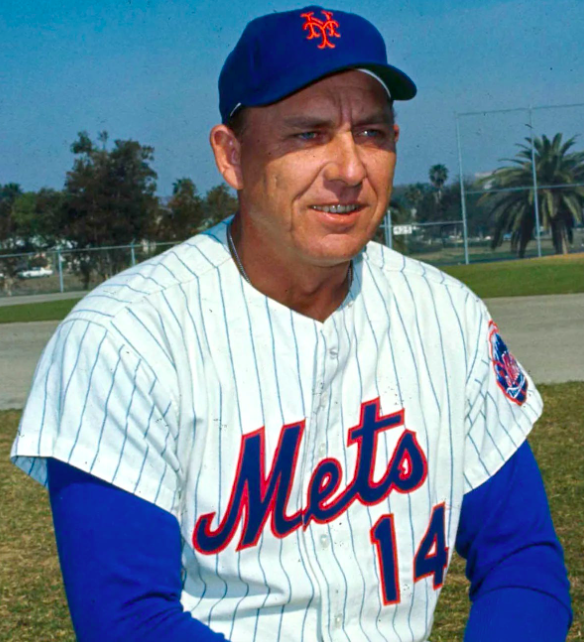
Gil Hodgeswas born April 4, 1924, in Princeton, Indiana, to Irene (Horstmeyer) and Charles Hodges, a coal miner. He moved at age seven to Petersburg and became a standout athlete at Petersburg High School, earning seven varsity letters in baseball, basketball, football, and track. In 1941, he turned down a Detroit Tigers offer and accepted a scholarship to St. Joseph’s College, where he played baseball and basketball before signing with the Brooklyn Dodgers in 1943. He debuted on October 3, 1943, then served in the Marines during World War II, earning a Bronze Star. After his discharge, he returned in 1947, transitioned from catcher to first base, and by 1949 was a full-time starter and an All-Star player.
Hodges played 17 seasons (1943; 1947 to 1963) primarily with the Brooklyn/Los Angeles Dodgers and finished with the New York Mets. He was an 8-time All-Star, won three Gold Gloves (1957 to 1959), and hit 370 home runs with a .273 batting average and 1,274 RBIs. He hit four home runs in a single game on August 31, 1950, and was a key contributor to the Dodgers’ World Series victories in 1955 and 1959. Hodges also led first basemen of the 1950s in home runs, RBIs, runs, hits, games, and total bases. He later managed the Washington Senators (1963 to 1967) and New York Mets (1968 to 1971), leading the Mets to their first World Series title in 1969.
Gil Hodgeswas known for his strong power, reliable defense, and calm leadership. Fans and teammates saw him as a gentleman both on and off the field. He died of a heart attack on April 2, 1972, at West Palm Beach, Florida, while playing golf, two days before turning 48. His sudden death led to widespread mourning and recognition of his character and contributions. He was elected to the Baseball Hall of Fame in 2022 by the Golden Days Committee, and both the Dodgers' and Mets' No. 14 jerseys were retired in his honor.
Sam Rice
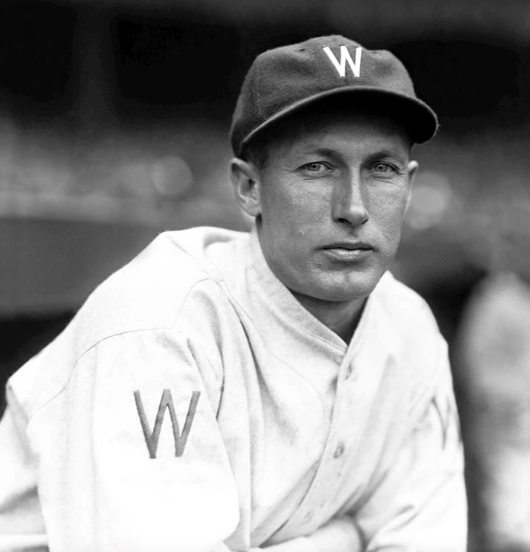
Sam Ricewas born February 20, 1890, in Morocco, Indiana. As a young adult, he briefly served in the U.S. Navy in 1913 before signing in 1914 as a pitcher with the Petersburg Goobers. He posted a 9–2 record with a 1.54 ERA in 1914 and went 11–12 in 1915. His contract was acquired by the Washington Senators, who converted him to an outfielder.
Rice made his MLB debut on August 7, 1915, with Washington and played there through 1933, finishing his final year with Cleveland in 1934 at age 44. He was a key player on the Senators' pennant-winning teams in 1924 and 1925, helping them win the 1924 World Series and bat .364 in the 1925 Fall Classic. He amassed 2,987 hits, a .322 batting average, 34 home runs, 1,078 RBIs, 351 stolen bases, and led the AL in stolen bases in 1920. Known for his sure hands, patience at the plate, and speed (leading off eight straight seasons), Rice also earned fame for his controversial 1925 World Series catch. He maintained possession of the ball, confirmed in a letter opened after his death.
Rice also excelled defensively, twice leading AL outfielders in putouts and establishing a putout record in 1920. He walked 708 times while striking out only 275, showing strong plate discipline and contact skills. He was elected to the Baseball Hall of Fame in 1963 and retired just 13 hits shy of 3,000.
After retiring, Rice settled in Ashton, Maryland, where he farmed chickens, bred racing pigeons, developed real estate, and stayed active in golf, youth sports, and old-timers events. He died October 13, 1974, in Rossmoor, Maryland, from cancer at age 84.
Billy Herman
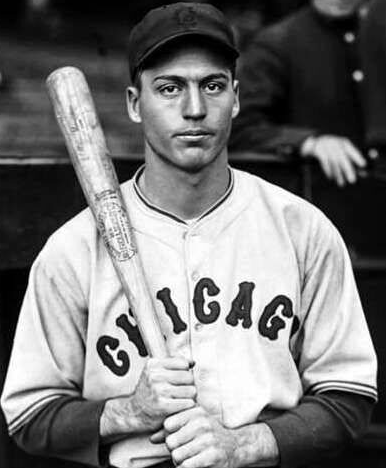
Billy Hermanwas born July 7, 1909, in New Albany, Indiana, and attended New Albany High School. He began his professional career in 1928 with the Louisville Colonels of the American Association. After batting .355 over four minor league seasons, the Chicago Cubs purchased his contract for $50,000 in August 1931. He made his major league debut on August 29, 1931, and by 1932 secured the starting second base job, hitting .314 in 1932 with 206 hits and forming a top double-play combo with Billy Jurges.
Herman played 16 full major league seasons (1931 to 1943, 1946 to 1947), spending most of his career with the Cubs before stints with the Dodgers, Braves, and Pirates. He was a 10-time All-Star (1934 to 1943), led the NL in hits (227 twice) and doubles (57 twice in 1935 to 1936), and batted over .300 in six of his first eight seasons. Known for his skill on offense and defense, he still holds the NL record for most putouts in a season by a second baseman and led the league in that category seven times. After missing the 1944 to 1945 seasons serving in the U.S. Navy during World War II, he returned for parts of 1946 and became player-manager for the Pirates in 1947 before retiring on August 1, 1947.
Herman finished with a .304 batting average, 2,345 hits, 486 doubles, 82 triples, 47 home runs, 839 RBIs, 1,163 runs scored, .367 on-base percentage, and .774 OPS across 1,922 games. Defensively, he recorded a .968 fielding percentage at second base and held multiple records. After retiring, he coached and managed various teams, including the Dodgers, Braves, Red Sox, Angels, and Padres. He was elected to the Baseball Hall of Fame in 1975. Herman passed away from cancer on September 5, 1992, in West Palm Beach, Florida, age 83.
Edd Roush
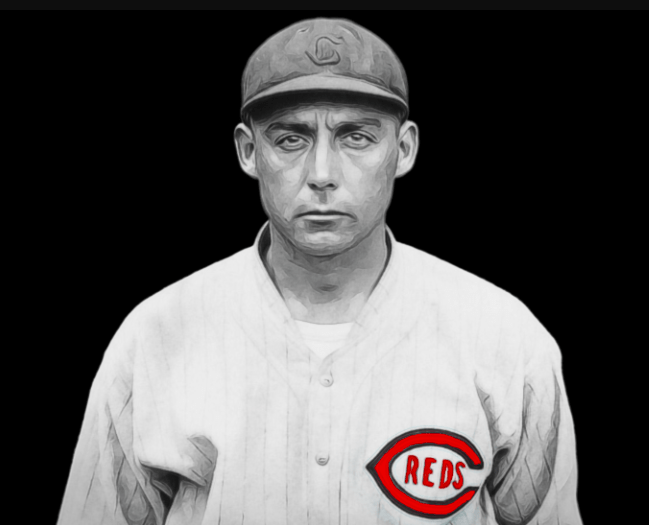
Edd Roushwas born May 8, 1893, in Oakland City, Indiana, one of twins to Laura and William Roush, who owned a dairy farm. He began playing semi-pro baseball in 1909 and moved through minor leagues with Henderson and Evansville before the Chicago White Sox signed him in 1913. He made his MLB debut on August 20, 1913, with the White Sox but soon played in the Federal League (1914 to 1915) before joining the Cincinnati Reds from 1916 to 1926, followed by stints with the New York Giants (1927 to 1929) and a final season with the Reds in 1931.
Over an 18-yearmajor league career, Roush was a two-time NL batting champion (1917, 1919), hit .323with 2,376 hits, 68 home runs, 981 RBIs, and 268 stolen bases, and helped Cincinnati win the 1919 World Series. A lefty with a 48‑ounce bat, he was renowned for his place-hitting, line drives, and top-tier defense in center field, drawn comparisons to Tris Speaker and praised by John McGraw. He was inducted into the Baseball Hall of Fame in 1962.
Off the field, Roush farmed and served on his hometown board in Oakland City, later wintered in Bradenton, Florida, and stayed active in local baseball and community governance. He died March 21, 1988, in Bradenton at age 94, the last surviving player of the 1919 Reds.
Mordecai Brown
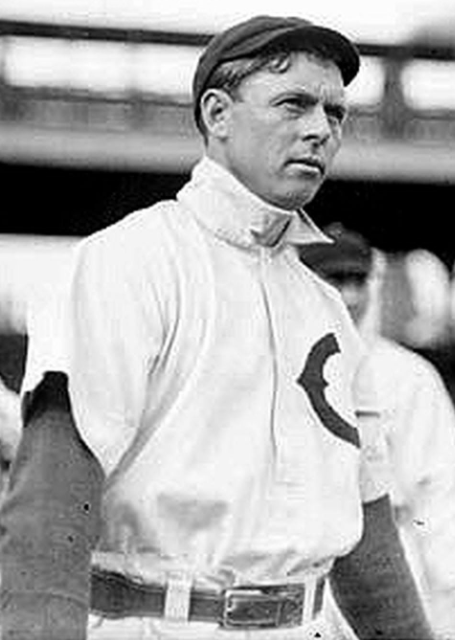
Mordecai Brownwas born October 19, 1876, in Nyesville, Indiana, one of five children of farmer Peter Brown and homemaker Jane Marsh. A childhood accident at age seven led to the loss of part of his right index finger and damage to other fingers, which later gave him a unique grip and a powerful sinker curveball. He began in semipro ball as an infielder, but naturally shifted to pitching due to the movement he achieved. Brown dominated in the Three I League with Terre Haute in 1901 (25–8), then starred in the Western League for Omaha in 1902 (27–15). He debuted in MLB with the St. Louis Cardinals on April 19, 1903, then was traded to the Chicago Cubs, where from 1904 to 1912 he led the league in wins and ERA multiple times, won 20+ games six seasons, played a key role in the Cubs’ 1907 and 1908 World Series titles including the pennant clinching game in 1908 and earned the nickname “Three Finger”.
In his 14 year major league career (1903 to 1916), Brown posted a 239–130 record, 2.06 ERA (lowest among pitchers with over 200 wins), 1,375 strikeouts, 55 shutouts, and completed 271 games. He also had a respectable .206 batting average with 2 home runs and 73 RBIs. Brown later played for Cincinnati and in the Federal League, serving as player manager for St. Louis in 1914, before ending his career with the Cubs in 1916. After retirement he managed and coached in the minors, operated a filling station in Terre Haute, and pitched in old timers’ games. He was elected to the Hall of Fame in 1949 but died on February 14, 1948, at age 71 in Terre Haute from complications related to diabetes.
Max Carey
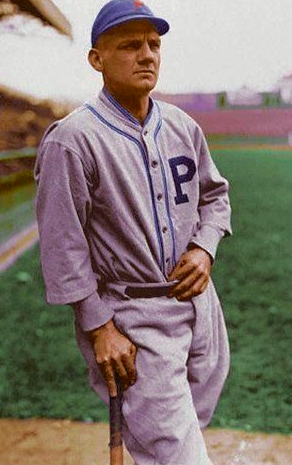
Maximillian George Carnarius, known as Max Carey, was born January 11, 1890, in Terre Haute, Indiana, to a Prussian immigrant father and grew up attending Concordia College with plans for the ministry. He played baseball, swimming, and track in college. In the summer of 1909, he joined the South Bend Greens under the name “Max Carey” to preserve his amateur status, batting .298 with 86 stolen bases in just 96 games. This performance convinced him to leave the seminary and pursue baseball full-time. He debuted in MLB on October 3, 1910, with the Pittsburgh Pirates after two strong minors seasons.
Carey played 20 MLB seasons (1910 to 1929), primarily with the Pirates before finishing with the Brooklyn Robins. He led the National League in stolen bases ten times, totaled 738 steals (an NL record until 1974), and also led in outfield putouts nine times. A switch-hitter with a .285 career average, Carey racked up 2,665 hits, 70homers, 802 RBIs, 1,545 runs, and a .361 OBP. He helped Pittsburgh win the 1925World Series, later managed the Dodgers (1932 to 33), led the Milwaukee Chicks in the AAGPBL, and served as league president. Inducted into the Baseball Hall of Fame in 1961, he passed away of natural causes on May 30, 1976, in Miami at age 86.
Freddie Fitzsimmons
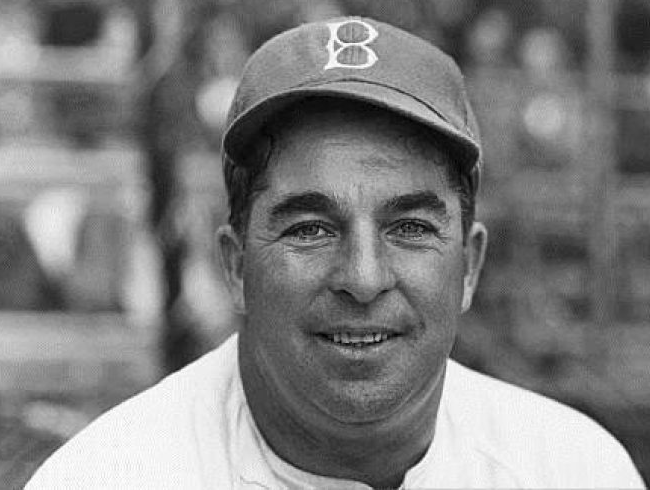
Freddie Fitzsimmonswas born July 28, 1901, in Mishawaka, Indiana, and grew up playing baseball on local sandlots and semi pro teams. He honed his unique pitching motion and developed a knuckle curve early in his career. After strong performances in the minor leagues with the Muskegon Muskies and Indianapolis Indians, he debuted in MLB on August 12, 1925, with the New York Giants.
Over a 19-year major league career (1925 to 1943), Fitzsimmons played for the Giants and Brooklyn Dodgers, recording a 217–146 win–loss record, 3.51 ERA, 870 strikeouts, and 1.30 WHIP across 513 games. He became known for his mastery of the knuckle curve, durable delivery, and agility, leading the NL in putouts four times and once setting the major league record for double plays by a pitcher (79). He helped the Giants win the 1933 World Series and led the NL in winning percentage twice (.731 in 1930, .889 in 1940), posting 16 or more wins in seven seasons. His career included highlights like the Giants’ pennant winning seasons and Brooklyn’s 1941 World Series appearance, despite being sidelined mid game by a knee injury in Game 3.
Fitzsimmons transitioned to managing and coaching after his playing days. He managed the Phillies (1943 to 1945), served as a coach for several clubs including the Giants during their 1954 title and briefly held a front office role in football. A popular figure known for his colorful personality, he retired in Yucca Valley, California. He died by suicide on November 18, 1979, at age 78, in Yucca Valley.
Cy Williams
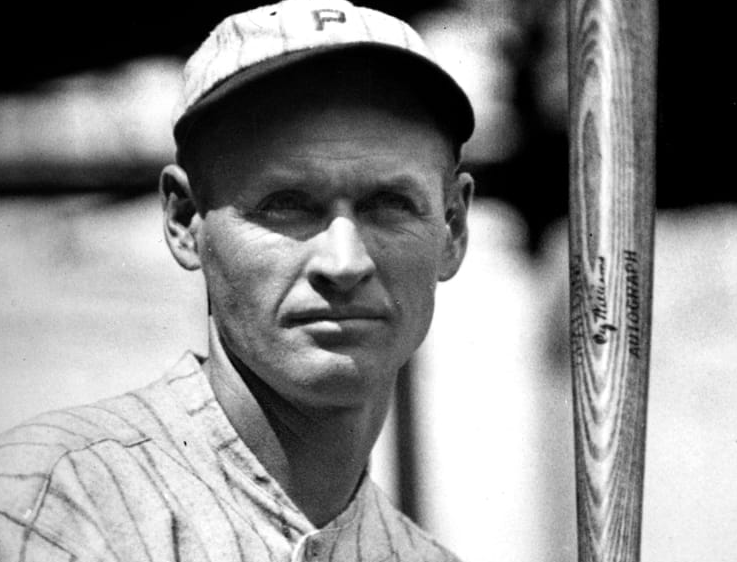
Cy Williamswas born December 21, 1887, in Wadena, Indiana, the son of Oscar and Anna Williams, and grew up on a rural farm. He attended the University of Notre Dame, where he studied architecture and played football with Knute Rockne, as well as baseball and track. His power-hitting stood out during exhibition games, and he signed with the Chicago Cubs after graduating in 1912. He debuted in MLB on July 18, 1912, with the Cubs in a limited role before securing a regular position by 1915, when he hit 13 home runs, then a high number in the dead ball era.
Williams played 19 seasons (1912 to 1930), spending six with the Cubs and finishing with 13 seasons with the Philadelphia Phillies. He led the National League in home runs four times (1916, 1920, 1923, 1927) and was the NL’s first player to hit 200 career homers, finishing with 251, a league record until Rogers Hornsby broke it in 1929. Over his career, he compiled a .292 batting average, 1,005 RBIs, 1,981 hits, 1,024 runs, and an .365 on-base percentagein 2,002 games. Defensively, he was a reliable center fielder, boasting a .973 fielding percentage, and was involved in the early use of the “Williams Shift” to counter his pull heavy swing. He hit for the cycle on August 5, 1927.
After retiring following the 1930 season, Williams managed and played one year in the minors before returning to Wisconsin. There, he applied his architecture training to build his own construction firm and dairy farm in Three Lakes. He retired in Eagle River, Wisconsin, and passed away of natural causes on April 23, 1974, at age 86.
Bob Friend
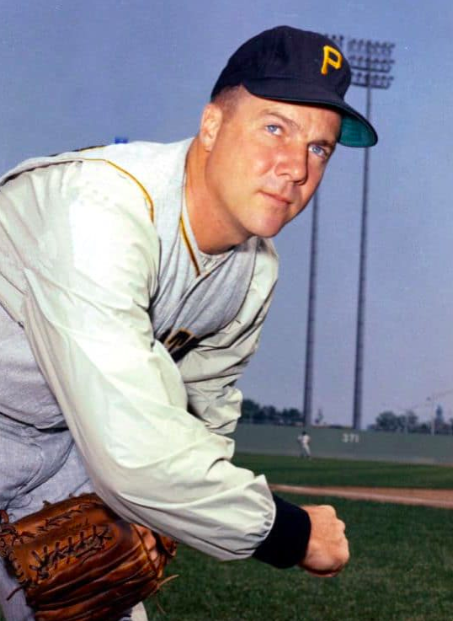
Bob Friendwas born November 24, 1930, in Lafayette, Indiana, and raised in West Lafayette. His father led an orchestra and taught him piano early on, but passed when Bob was 16. At West Lafayette High School, he excelled in football (all-state halfback), baseball (all-state pitcher), basketball, and golf, the nickname “Warrior” originated from his football days. A shoulder injury ended his football aspirations and led him to focus on baseball. He signed with the Pittsburgh Pirates in 1950 while attending Purdue University, where he earned a degree in economics in 1957.
Friend debuted in MLB on April 28, 1951, with the Pirates and pitched 16 seasons, mostly with Pittsburgh before brief 1966 stints with the Yankees and Mets. He became a four-time All-Star (1956, 1958, 1960²), led the NL in ERA (2.83, 1955) and wins (22, 1958), and was a key member of the 1960 World Series champions. Over his career, he posted a 197–230 record, 3.58 ERA, 1,734 strikeouts, and pitched over 3,480⅓ innings, still Pirates records for innings and strikeouts. Known for his sinker, curve, slider, strong control, and ironman durability, he never spent a day on the disabled list.
After retiring in September 1966, Friend remained in Pittsburgh, helped found the Pirates Alumni Association, served as Allegheny County Controller (1967 to 1975), and later worked in insurance. He married Patricia Koval in 1957 and had two children, including pro golfer Bob FriendJr. Friend died February 3, 2019, at age 88 in O’Hara Township, Pennsylvania, of cardiac arrest while sleeping.
Dizzy Trout
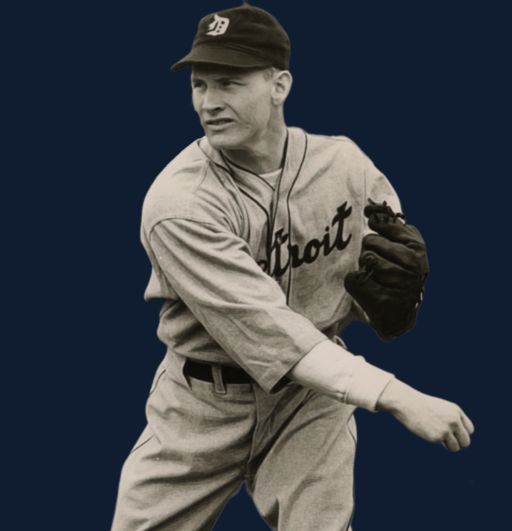
Dizzy Troutwas born June 29, 1915, in Sandcut, Indiana, the youngest of four children of Virgil and Emma Trout, who worked as a coal miner and tenant farmer. He left home early due to family issues and began semi‑pro baseball in 1934 by hopping a freight train to Chicago, which led to tryouts with the White Sox and Cubs. He then signed with the Terre Haute Tots (Three‑I League) in 1935 and spent the next season with Indianapolis before being acquired by the Tigers.
Trout made his MLB debut on April 25, 1939, with the Detroit Tigers, launching a 14-season career primarily in Detroit before finishing with Boston in 1952 and briefly returning with Baltimore in 1957. He became a 2× All‑Star (1944, 1947), led the AL in wins (20 in 1943), and was the ERA leader (2.12 in 1944). That standout 1944 season included 27 wins, 33 complete games, 7 shutouts, and 352⅓ innings pitched, part of a dynamic duo with Hal Newhouser who dominated AL pitching. Trout also starred in the 1945 World Series, tossing a five‑hit shutout in Game 4 to help Detroit win the title.
Over his career, he compiled a 170–161 record, 3.25 ERA, 1,256 strikeouts, and 1.35 WHIP in 2,725⅓ innings across 521 games, and was known for his strong sinker, curve, and resilience. On offense, he was a rare power-hitting pitcher, batting .213 with 20 home runs, tied for 11th among pitchers. Known for his humor and occasional temper, Trout once attacked a heckler in 1942 and famously rode a motorcycle around the park enjoying attention.
After retiring as a player, he became a Tigers radio/TV broadcaster (1953 to 1955), managed tryout camps, and ran for sheriff in Wayne County in 1956. Trout passed away from stomach cancer on February 28, 1972, in Harvey, Illinois, at age 56.
Don Larsen
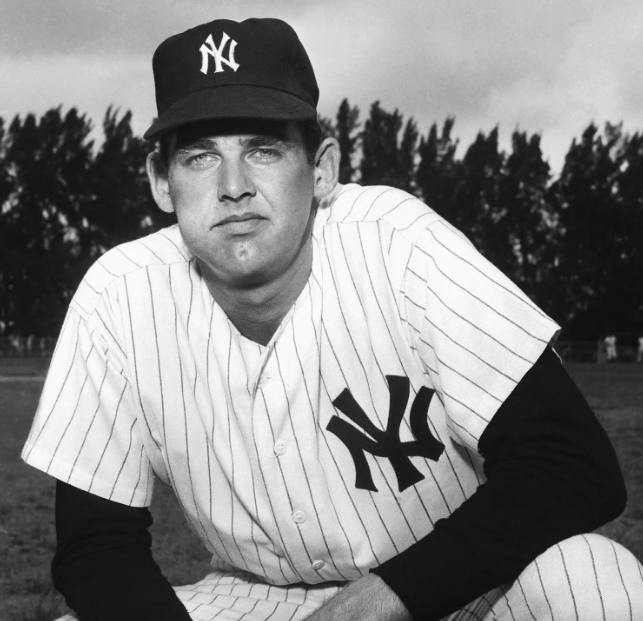
Don Larsenwas born on August 7, 1929, in Michigan City, Indiana, and later moved with his family to San Diego, California. He attended Point Loma High School, where he excelled in basketball and baseball. Despite not attending college, Larsen caught the attention of scouts with his strong arm and pitching control. He signed with the St. Louis Browns in 1947 after high school and began playing in the minor leagues, where he developed into a promising right-handed pitcher.
Larsen made his Major League Baseball debut on April 17, 1953, with the St. Louis Browns. He later played for several teams, including the Baltimore Orioles, New York Yankees, Kansas City Athletics, Chicago White Sox, San Francisco Giants, Houston Colt .45s, and Chicago Cubs. His most famous moment came on October 8, 1956, when he pitched the only perfect game in World Series history during Game 5 for the Yankees against the Brooklyn Dodgers. He was named the World Series MVP that year. Over his 14-season MLB career (1953–1967), Larsen was known for his inconsistent regular-season performance but clutch postseason success. He was involved in several trades, including a major one that brought Roger Maris to the Yankees in 1959. His career stats include a win-loss record of 81–91, an ERA of 3.78, and 849 strikeouts.
Don Larsenwas a right-handed pitcher known for his calm demeanor, solid fastball, and effective control. He was not overpowering but relied on smart pitch placement and timing. His legacy rests heavily on his 1956 World Series perfect game, which remains a historic achievement. Though not elected to the Hall of Fame, his feat is still celebrated. Off the field, Larsen was known for his humble lifestyle and made occasional appearances at Yankees events and Old-Timers' games. He passed away on January 1, 2020, at age 90 in Hayden, Idaho, due to esophageal cancer.
Phil Bradley
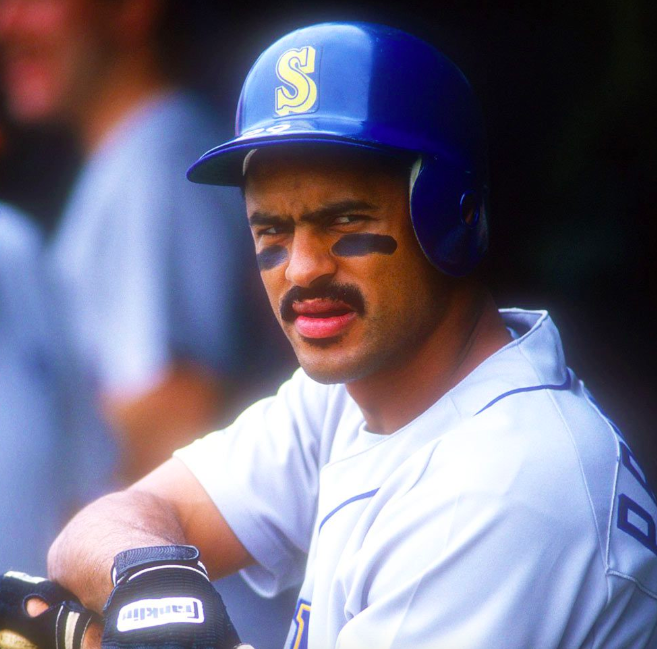
Phil Bradleywas born on March 11, 1959, in St. Joseph, Missouri. He grew up in the Midwest and attended Lafayette High School in St. Joseph. He later played college football and baseball at the University of Missouri, where he became the school's first African American starting quarterback and earned All-Big Eight honors. Bradley’s athleticism and success in both sports helped him attract attention from professional baseball scouts, leading to his selection by the Seattle Mariners in the third round of the 1981 MLB Draft. He quickly moved through the minor league system, showing strong contact hitting and speed.
Bradley made his MLB debut on September 2, 1983, for the Seattle Mariners. He played in the majors from 1983 to 1990, spending time with the Mariners, Philadelphia Phillies, Baltimore Orioles,and Chicago White Sox. His best seasons came with Seattle, especially in 1985, when he batted .300, hit 26 home runs, had 88 RBIs, and scored 100 runs, earning an All-Star selection. He was traded to the Phillies after the 1987 season and played two more productive years before short stints with the Orioles and White Sox. Bradley had a career batting average of .286, with 78 home runs, 376 RBIs, and 155 stolen bases over 1,007 games. He never won MVP or Gold Glove awards, but his consistent offensive production made him a valuable outfielder.
Bradley was a left-handed hitter and thrower who played primarily as a left fielder. He was known for his speed, contact hitting, and plate discipline, drawing many walks and maintaining a strong on-base percentage. After retiring from MLB, he played briefly in Japan with the Yomiuri Giants. Post-baseball, Bradley worked with the Major League Baseball Players Association as a special assistant and remained active in player advocacy.
Clint Barmes
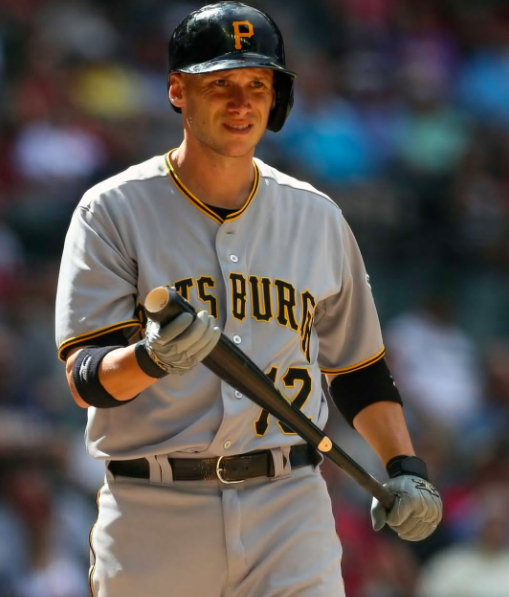
Clint Barmeswas born on March 6, 1979, in Vincennes, Indiana. He grew up in a sports-oriented family and attended Lincoln High Schoolin Vincennes. After high school, he played college baseball at Indiana State University, where he developed into a standout shortstop. He was selected by the Colorado Rockiesin the 10th round of the 2000 MLB Draft. Barmes played in the minor leagues from 2000 to 2003, progressing through teams like the Asheville Tourists and Colorado Springs Sky Sox, where he impressed with his defense and ability to hit for average.
Barmes made his Major League debut on September 5, 2003, with the Colorado Rockies. He played in the MLB from 2003 to 2015, spending time with the Rockies, Houston Astros, Pittsburgh Pirates, and San Diego Padres. One of his most notable moments came in 2005, when he hit a walk-off home run on Opening Day. That year, he had a strong start but suffered a broken collarbonefrom a fall while carrying groceries, which disrupted his season. He was traded to the Astros in 2010 and later signed with the Pirates and Padres. Over his career, he posted a .245 batting average, with 89 home runs, 415 RBIs, and 980 hits in 1,186 games. He did not receive major awards like MVP or Gold Gloves but was known as a reliable defensive infielder.
Barmes primarily played as a shortstopand second baseman. He was a right-handedhitter and thrower, known for his strong arm, solid fielding, and leadership on the field. His defensive skills kept him in the league for over a decade, even when his offensive numbers declined. Off the field, Barmes has kept a relatively low profile, with no major public controversies or media ventures.
Brandon Beachy
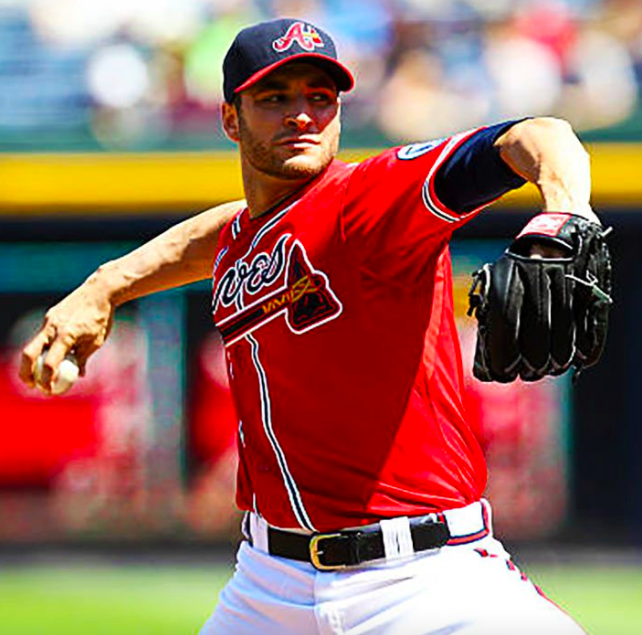
Brandon Alan Beachy was born on September 3, 1986, in Kokomo, Indiana. He attended Northwestern Senior High School, where he won Indiana’s Class AA Mental Attitude Award and led his team to the state finals. He continued his baseball journey at Indiana Wesleyan University, playing as a third baseman, first baseman, and pitcher. Undrafted out of college in 2008, he signed with the Atlanta Braves as a free agent and began his minor‑league career. In the minors he progressed quickly, recording a 1.47 ERA with 100 strikeouts in 73.2 innings at Double-A and maintaining a 3.27 ERA over four seasons before reaching the majors.
Beachy made his MLB debut on September 20, 2010, with the Braves. His standout season came in 2011, when he posted a 7–3 record, 3.68 ERA, and led National League rookies with 169 strikeouts, setting a Braves modern-era rookie record. In 2012 he started strong and threw his first career shutout, but a partially torn UCL ended his season, and he underwent Tommy John surgery on June 21 while leading MLB with a 2.00 ERA. After returning for five starts in 2013 with a 2–1 record and 4.50 ERA, he needed a second Tommy John surgery in March 2014 and missed the entire season. Beachy joined the Los Angeles Dodgers in 2015, making two major‑league starts with a 7.88 ERA before returning to Triple‑A; he then elected free agency in October.
In his MLB career across five seasons (2010–2015), Beachy finished with a 14–12 win–loss record, a 3.36 ERA, 280 strikeouts in 275 ⅔ innings, and a 1.16 WHIP. He threw a four‑seam fastball (90–94 mph), slider, changeup, and curveball, using the changeup more frequently against left‑handed hitters and relying on the slider in two‑strike counts. Known for his strikeout ability and strong rookie impact, his career was significantly limited by injuries. Off the field, Beachy is the eldest of seven, with parents Lester and Lori, and he majored in pre‑law and criminal justice; he has also worked at a center for delinquent children.
Lloyd McClendon
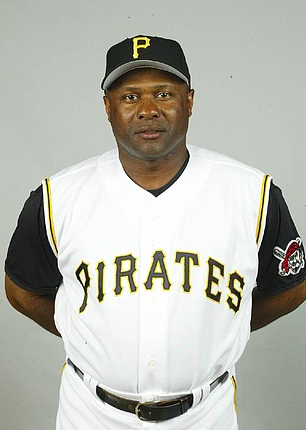
Lloyd Glenn McClendon was born on January 11, 1959, in Gary, Indiana, one of twelve children. Growing up in Gary, he shined early in baseball, playing in the 1971 Little League World Series, where his team became the first all–African American team to reach the finals, and he hit five home runs in five at‑bats while opponents intentionally walked him the rest of the time. He attended Roosevelt High School, graduating in 1977, then played college baseball at Valparaiso University. There, he batted .330 with 18 home runs and 73 RBIs, earning all-conference honors twice.
McClendon signed professionally after being drafted by the Mets in the eighth round in 1980. He debuted in MLB on April 6, 1987, with the Cincinnati Reds and played eight seasons through 1994 with the Reds, Chicago Cubs, and Pittsburgh Pirates. Career highlights include contributing to the Cubs’ 1989 NL East title with .286 average and 12 homers, and setting an NLCS record in 1992 with hits in eight consecutive postseason at-bats (.727 average), including a homer. He finished with a .244 batting average, 35 home runs, and 154 RBIs over 570 games.
After retiring, he became a coach and manager. He served as the Pirates’ hitting coach (1997–2000) and manager (2001–2005), compiling a 336–446 record. He became the first African American head coach in Pittsburgh sports history. He then joined the Tigers as bullpen coach (2006), hitting coach (2007–13), and briefly interim manager in 2020. He managed the Mariners (2014–15), recording an 87–75 season in 2014. Known for his fiery style, he once stole first base during a 2001 game to protest a call.
McClendon played outfield, first base, catcher, and third base, noted for his versatility and solid defense. His impact includes pioneering roles, first African American head coach in Pittsburgh and managing multiple MLB teams. He also significantly boosted Detroit’s offense as hitting coach, helping the Tigers lead the league in batting in 2013. Off the field, McClendon married Ingrid Scott in 1981, with two children, Schenell and Bo, both Valparaiso alumni, and granddaughter Bryn. He resides in Indiana and remains active in baseball as of 2022, managing the Toledo Mud Hens.
Jouett Meekin
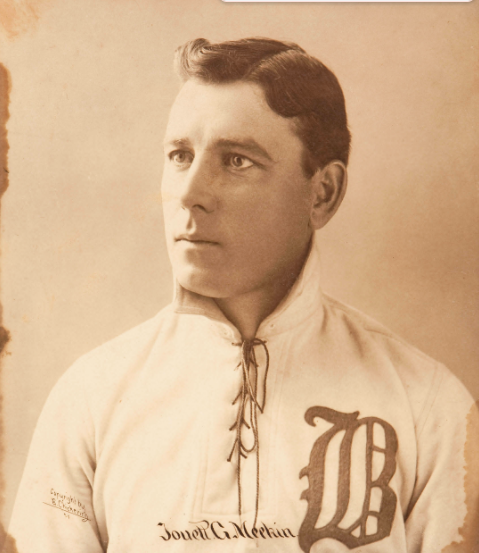
George Jouett Meekin was born on February 21, 1867, in New Albany, Indiana, to a family prominent in riverboat piloting and boatbuilding. He entered baseball in his early twenties as a catcher for the local New Albany semipro team before quickly switching to pitching in 1889. Meekin first played minor league ball with Scranton in 1887 and then three seasons with the St. Paul Apostles in the Western Association. He earned a chance with the Louisville Colonels and debuted in the major leagues on June 13, 1891.
Meekin pitched in Major League Baseball from 1891 to 1900 with five teams: Louisville Colonels, Washington Senators, New York Giants, Boston Beaneaters, and Pittsburgh Pirates. He was known as one of the fastest throwers of his era and helped prompt the pitching distance change to 60 ft 6 in. His best season came in 1894 with the Giants, where he went 33–9, pitched 418 innings, and led the National League in winning percentage. He also recorded three triples in a single game, a rare feat for a pitcher. He posted 20-win seasons again in 1896 and 1897 and won the Temple Cup with the Giants in 1894. Over his career, Meekin went 153–133 with a 4.07 ERA, struck out 900 batters, and hit .243 with 15 home runs and 131 RBIs in 1,098 at-bats.
Meekin primarily pitched and batted right-handed. He was aggressive, sometimes throwing close to a batter’s head early in games. He also set the first recorded intentional walk in 1896. While he did not win major awards, his 1894 season and role in changing mound distance gave him lasting influence. After leaving MLB in 1900, he played minor league ball and later worked briefly as an umpire and as a firefighter. He lived his entire life in New Albany until his death from a heart attack on December 14, 1944, at age 77; he died in the hospital following injuries from a fall and was buried in Fairview Cemetery.
Carl Erskine
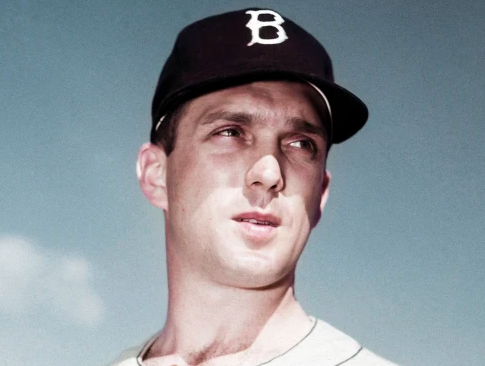
Carl Daniel Erskine was born on December 13, 1926, in Anderson, Indiana, the youngest of three sons. He began playing baseball at age nine in a local parks program. After graduating from Anderson High School in 1945, he joined the U.S. Navy and was stationed at the Boston Navy Yard. Following his discharge in 1946, he signed with the Brooklyn Dodgers after a contested bidding process.
Erskine debuted in MLB on July 25, 1948, with the Brooklyn Dodgers and stayed with the franchise through its move to Los Angeles until his final game on June 14, 1959. He started his career as a reliever, going 21–10 across his first two seasons, then moved into the starting rotation by 1951. His standout year was 1953, when he recorded a 20–6 win–loss record, led the league in winning percentage, struck out 187 batters, and pitched 16 complete games. He threw two no-hitters in 1952 and 1956, and appeared in five World Series, including the Dodgers’ 1955 championship, and was selected as an All-Star in 1954. Known for his hard curveball, he achieved 122–78 career record with a 4.00 ERA, and 981 strikeouts over 1,718⅔ innings.
Erskine was a right-handed pitcher, noted for his strong curveball. He set a World Series single-game strikeout record with 14 in Game 3 of the 1953 Series, a mark that stood until 1963. His legacy includes being one of the last surviving members of Brooklyn’s “Boys of Summer,” influencing the game with durability and postseason performance, and earning recognition such as All-Star honors.
After retiring, Erskine returned to Anderson where he opened an insurance business, coached at Anderson College for 12 seasons (winning the NAIA World Series in 1965), served as a bank president, and became a leading advocate for individuals with developmental disabilities, inspired by his son Jimmy who had Down syndrome. He received the Buck O’Neil Lifetime Achievement Award in July 2023 for over 40 years of work with the Special Olympics and other causes. Erskine passed away on April 16, 2024, at age 97 in Anderson, Indiana, after a brief illness; he was the last living player from Brooklyn’s 1955 champion team.
Latest Articles
Popular Articles