Mordecai Brown: The Legendary “Three-Finger” Pitcher Who Redefined Baseball
Discover the inspiring story of Mordecai “Three-Finger” Brown, the Hall of Fame pitcher who turned a childhood injury into a career advantage. Learn how he became a Chicago Cubs legend with record-breaking wins, historic World Series performances, and one of the lowest ERAs in baseball history.
Aug 16, 202520.5K Shares571.1K Views
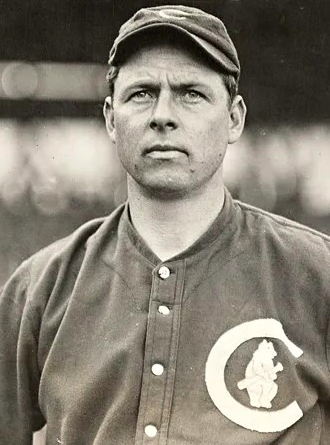
Mordecai “Three-Finger” Brown drew attention with his strange grip and strange curveball that made batters miss. He became the top pitcher for the Chicago Cubs from 1904 to 1912, winning 20 or more games six years in a row and helping the team win the World Series twice. His record of 239 wins, a 2.06 ERA, and his place in the Hall of Fame show how dominant he was on the mound. John McGraw, the Giants’ manager, considered him and Christy Mathewson the two best pitchers of their time. His career stretched into new leagues and teams, but he always stood out for his skill and grit.
Early Life
Mordecai Peter Centennial Brown was born on October 19, 1876, in Nyesville, Indiana, to Jane and Peter Brown. He had working-class roots and even spent time as a teenage coal miner, earning the nickname "Miner." When he was about six or seven years old, a farm accident seriously injured his right hand—he lost his index finger, and the other fingers were mangled and did not heal properly. Remarkably, he turned this challenge into a strength: because of his unique grip, he learned to throw a powerful, unusual curveball that baffled hitters. He started his baseball journey playing locally and caught the eye of pro scouts, leading him into the major leagues.
Career
Mordecai “Three-Finger” Brown began his major league career in 1903 with the St. Louis Cardinals. His first season was not very strong, as he finished with a record of 9–13, but he still showed promise by leading the team in earned run average and wins. In 1904, he was traded to the Chicago Cubs, and this move marked the beginning of his rise as one of the best pitchers of his time. From 1904 to 1912, Brown became a star, winning at least 20 games in six straight seasons. In 1908, he reached a career-high 29 wins, and in 1906 he had one of the greatest pitching seasons in baseball history with a record of 26–6 and an ERA of 1.04. That ERA still remains the lowest ever recorded in the National League by a pitcher who threw at least 250 innings in a season.
During his years with the Cubs, Brown helped lead the team to several championships. He played a key role in the Cubs’ three World Series titles between 1907 and 1910. In the 1907 and 1908 World Series, he was especially dominant, winning all three games he pitched without giving up a single earned run. His career totals were also impressive, as he finished with 239 wins, 130 losses, 1,375 strikeouts, and a career ERA of 2.06, which still ranks among the best in baseball history.
Brown was not only successful as a starting pitcher but also stood out as a reliever. Between 1908 and 1911, he led the league in saves and became known for his ability to close out games. He also pitched 55 career shutouts, which placed him among the top pitchers of his era. His unique pitching style came from his childhood injury that left him with only parts of two fingers on his right hand. This condition allowed him to throw a sharp-breaking curveball that baffled hitters throughout his career.
After leaving the Cubs in 1912, Brown continued his career with other teams. He pitched one season for the Cincinnati Reds and then joined the new Federal League, where he worked as a player-manager for the St. Louis Terriers in 1914. He later played with the Brooklyn Tip-Tops and Chicago Whales before returning to the Cubs for one last season in 1916. Even in his late 30s, he remained competitive, though he eventually retired from the majors at the age of 39.
Jump to
Latest Articles
Popular Articles