June Pursell – The Golden Voice Of The Jazz Age
Explore the life of June Pursell, the celebrated singer, songwriter, and actress whose golden soprano voice and timeless charm lit up radio, records, and film in the 1920s and 1930s.
Aug 15, 202561.4K Shares916.7K Views
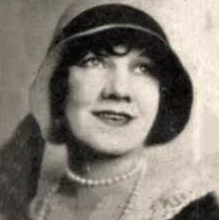
June Pursellwas born as Mary Pursell on December 16, 1902, in Indianapolis, Indiana. She grew up without plans to join show business, but after her father passed away, she took on the responsibility of helping her family. At one point, she broke her arm yet still performed in her earliest shows with her arm in a sling. She received her first regular radio contract at KNX radio station in Los Angeles, where she quickly won over fans—even if the announcer was not impressed with her first performance. Her singing earned her the nicknames "The KNX Girl" and "the girl with the ballad voice" as she became known across radio audiences.
Career
June Pursell became a beloved voice on American radio during the 1920s and 1930s. At first, she won a contract with KNX in Los Angeles after fans flooded the station with support even though the main announcer wasn’t impressed, earning her nicknames like “The KNX Girl” and “the girl with the ballad voice.” She later signed with NBC, and people compared her to the well-known singer Nora Bayes.
Between 1925 and 1932, Pursell recorded for major labels including Victor and Brunswick. From 1929 to 1931, she sang and recorded with Earl Burtnett and his Los Angeles Biltmore Hotel Orchestra, and in 1932 she performed with Jack Denny and his Waldorf-Astoria Orchestra. Her work also put her alongside other famous bandleaders like Roy Fox. Her soprano voice, strong yet graceful, helped her stand out both as a solo artist and as part of popular orchestras of the time.
Pursell also made a mark in early movies. She appeared in the musical film The Hollywood Revuein 1929 and later in Viennese Nightsin 1930, which brought her talent to an even wider audience. As a songwriter, she later penned songs such as What Good Am I Without Youand I Couldn't Love You More If I Tried, both copyrighted in 1956.
Jump to
Latest Articles
Popular Articles