How Much Was Richard Smallwood Worth At The Time Of His Death?
Richard Smallwood Net Worth analysis covering albums, songwriting royalties, ministry work, and why exact figures remain unconfirmed.
Jan 20, 202614.4K Shares204K Views
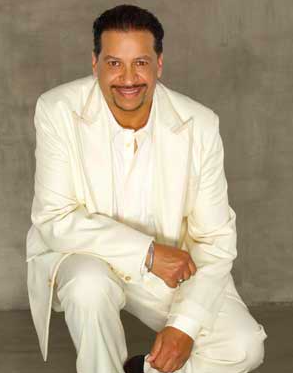
Richard Smallwood was born on November 30, 1948, in Atlanta, Georgia. He grew up in Washington, D.C., raised primarily by his mother, Mabel Smallwood, and his stepfather, Rev. Chester Lee “C.L.” Smallwood.
His stepfather served as pastor of Union Temple Baptist Church in Southeast Washington, exposing Smallwood early on to church hymns and a strong gospel-music environment. In this setting, Smallwood’s mother encouraged his musical interests and exposed him to a wide range of music from church hymns to classical, jazz, and opera.
Smallwood showed musical talent very young: he was playing piano by ear at age five and was taking formal piano lessons by age seven. By age eleven he had formed his first gospel music group of neighborhood children.
During his youth, one of his music teachers at Washington’s Hugh M. Browne Junior High School was noted singer Roberta Flack. He later attended Howard University in Washington, where he earned dual bachelor’s degrees in classical vocal performance and piano, graduating cum laude in 1971.
While at Howard, Smallwood was a member of the university’s first gospel ensemble (The Celestials) and helped found the Howard University Gospel Choir.
| Fact Category | Information |
| Estimated Net Worth | Public estimates place his net worth at $9–11 million; no official figure was released. |
| Main Income Sources | Earned from music royalties, albums, performances, and licensing. |
| Signature Work | “Total Praise” is his most recognized and performed composition. |
| Career Duration | Maintained a 45+ year professional gospel career. |
| Education | Graduated cum laude from Howard University in voice and piano. |
| Awards | Received 8 Grammy nominations and multiple gospel awards. |
| Church Role | Served as Minister of Music / Artist-in-Residence in Washington, D.C. |
| Mainstream Reach | His songs were recorded by major mainstream artists. |
| Music Catalog | Released 16 major gospel albums during his career. |
| Legacy Honor | Inducted into the Gospel Music Hall of Fame in 2006. |
Career & Musical Legacy
Richard Smallwood (1948–2025) was an American gospel composer, pianist, and choir director widely recognized as a pioneering figure in contemporary gospel music. Trained in classical voice and piano, he became known for fusing the precision of European art music with the soulfulness of Black church traditions.
Over a four-decade recording career he led both the Richard Smallwood Singers and later the choir Vision, creating a catalog of deeply spiritual songs that transformed modern gospel. His compositions – from stirring choruses like “Total Praise” to uplifting anthems like “Center of My Joy” – became mainstays in church repertoires.
Smallwood was an eight-time Grammy nominee whose richly arranged albums topped gospel charts and earned Dove and Stellar Awards. He served as a minister and music director (later artist-in-residence) at Washington, D.C.’s Metropolitan Baptist Church, further cementing his reputation as a dedicated churchman-musician. By the time of his death, Smallwood was widely celebrated as a maestro whose sophisticated arrangements raised gospel music to new artistic heights.
Smallwood’s influence was recognized with numerous honors. He won multiple industry awards and in 2006 was inducted into the Gospel Music Hall of Fame for his lifelong contributions. Civic leaders in Washington, D.C. and beyond also paid tribute to his impact: his 75th birthday in 2023 was marked as “Richard Smallwood Day” in the city, and he received the U.S. President’s Lifetime Achievement Award for service to the arts.
Throughout his career his songs were recorded by secular as well as gospel artists – Whitney Houston, Destiny’s Child, Stevie Wonder and Boyz II Men all performed Smallwood compositions – helping gospel cross into broader audiences. Smallwood died December 30, 2025, leaving behind a legacy of choir hymns and compositions that continue to inspire worshippers and musicians alike.
Early Professional Training & Entry Into Gospel Music
Smallwood’s formal music education laid the groundwork for his career. He attended Howard University in Washington, D.C., where he earned dual degrees in classical vocal performance and piano (graduating cum laude) and undertook graduate work in ethnomusicology.
At Howard he helped form the school’s first gospel group, the Celestials, and later was a founding member of the university’s pioneering gospel choir. These experiences at Howard – a cradle of Black music talent – were formative. As a student he honed his classical technique while deeply immersing himself in the gospel tradition under mentors like Roberta Flack and alongside future stars like Donny Hathaway.
After graduation, Smallwood began working as a church music director and educator. He served as music director for the Union Temple Baptist Church Young Adult Choir in D.C., where in 1974 and 1976 he produced his first studio recordings (Look Up and Liveand Give Us Peace, respectively). These albums featured his arrangements of traditional spirituals and hymns with a fresh contemporary sound.
For a time in the mid-1970s Smallwood also taught music at the University of Maryland, sharing his classical training with college students. In 1977 he formed the Richard Smallwood Singers – a select gospel choir – with the encouragement of friends like Edwin Hawkins. This group became the vehicle for his first major recordings and public performances.
Under Smallwood’s leadership the Singers developed a distinctive style that brought choral sophistication to gospel. Their 1982 self-titled debut album (on Benson/Onyx Records) became a breakthrough success, firmly establishing his career as a gospel composer and band leader.
Musical Expertise: Classical & Baroque Influence In Gospel
Smallwood’s music was deeply informed by his classical training and love of Baroque music. He often incorporated counterpoint, organ and orchestral textures into his arrangements.
Smallwood himself acknowledged this fusion: at Howard he was trained in classical vocal and piano, and throughout his life he expressed admiration for composers like Bach and Handel. As he once said of his influences, “My favorite classical composer on the planet is Johann Sebastian Bach. Anything Baroque I love.”This respect for European art music underpinned his arranging style.
For example, Smallwood was invited to contribute to Handel’s Messiah: A Soulful Celebration(a major recording project with Quincy Jones and Mervyn Warren), where he arranged traditional Messiah choruses for gospel choir, a project that won both a Grammy and a Dove Award. His choral writing often mirrors Baroque fugues and classical chorales, but always with a gospel inflection in harmony and rhythm.
Smallwood’s comfort with classical ensemble settings set him apart. He frequently brought gospel music into concert halls. In the mid-2010s, for instance, he headlined a “Gospel Christmas” concert with the St. Louis Symphony Orchestra’s IN UNISON Chorus, transforming the symphony hall into a worship space.
In such performances, Smallwood often led his choir and orchestra in lush, symphonic arrangements of gospel songs, highlighting his reputation as a bridge between sacred concert tradition and church music. Critics noted that by the time he formed his first major choir in the late 1970s, Smallwood was writing arrangements that were “lush, symphonic, and unapologetically formal” yet still emotionally powerful.
His anthem “Total Praise,”for example, has an extended orchestral intro and complex string lines that clearly reflect classical technique. Smallwood’s fluency in both worlds – the conservatory and the church – earned him the nickname of a gospel “maestro.” It was this signature fusion of classical precision with Black gospel fervor that became his hallmark and one of his most enduring contributions to the genre.
Career Breakthrough & Genre-Defining Contributions
Smallwood’s career breakthrough came with his first few albums, which reshaped gospel production values. The 1982 debut album Richard Smallwood Singersstayed on Billboard’s gospel charts for over a year, signaling strong public response.
Its follow-up Psalms(1984) included the song “Center of My Joy” (co-written with Bill and Gloria Gaither), which became an instant classic in Black gospel circles and earned Smallwood his first Grammy nomination. Another 1987 release, Textures, further solidified his reputation with smooth vocals and rich choir arrangements. These projects showed gospel labels that Smallwood could appeal to both traditional church-goers and younger listeners seeking a modern sound.
Throughout the 1980s and early 1990s he maintained a steady output with the Richard Smallwood Singers – live albums and studio projects that often featured full choirs, strings and uplifting messages.
A key genre-defining moment came in the 1990s when Smallwood founded a new large choir called Vision. In 1996 he led Vision in recording Adoration: Live in Atlanta, which included “Total Praise,”one of his most influential compositions. “Total Praise” was born from a moment of personal grief but became a contemporary hymn that transcended church walls.
That same year, his song “I Love the Lord”found a global audience when Whitney Houston recorded it for the movie The Preacher’s Wife.Houston’s hit version introduced Smallwood’s work to mainstream pop audiences and exemplified his skill in crafting songs that could move seamlessly between gospel choirs and film soundtracks.
These mid-’90s successes – the soaring “Total Praise,” the Gaither-collaboration in Psalms,and the exposure via major film – helped define the sound of late-20th-century gospel music. Smallwood showed that gospel compositions could be both deeply reverent and broadly appealing, setting a template that many worship leaders would follow.
Major Works, Compositions & Career Achievements
Among Smallwood’s celebrated compositions are many worship standards. In addition to “Total Praise,”he wrote “Center of My Joy”(1981) and “He Did It All”(1996) – songs that remain widely sung in church services.
The album Live in Atlanta(1996) introduced “He Did It All,”a stirring ballad that won a Dove Award for Best Traditional Gospel Song. The 1997 Christmasrecording Rejoiceincluded “I’m Not Afraid” and “All Things Praise Yah,” further showcasing his songwriting.
Many of Smallwood’s compositions feature extended choral “Amen” sections or call-and-response patterns that have become gospel tropes, reflecting his talent for building participatory worship anthems. He also arranged other composers’ works, such as adapting Handel and African American spirituals, blending them into his concerts.
Smallwood’s achievements brought him industry acclaim. He accumulated eight Grammy nominations over his career, and he won a Grammy for his contribution to Handel’s Messiah: A Soulful Celebration.He earned three GMA Dove Awards and seven Stellar Gospel Music Awards in categories like Choir of the Year and Traditional Male Vocalist.
In 2006 the Gospel Music Association honored him with induction into their Hall of Fame. Alongside these awards for recordings and songwriting, Smallwood had high-profile performance credits: he played piano at the White House for Presidents Nixon, Reagan and Clinton, and he even toured internationally as a gospel ambassador, one of the first to bring gospel to the Soviet Union in the 1980s.
His album catalog ultimately included 16 major releases from 1982’s debut through Anthology Live(2015). These recordings earned him multiple gold and platinum plaques in gospel music, underscoring a career of both artistic and commercial success.
How Much Was Richard Smallwood Worth When He Died?
At the time of his death, some public sources estimated Richard Smallwood’s net worth to be in the range of US$9–11 million. He derived his income from decades of work as a gospel composer, pianist, and choir director, with earnings from album sales, concerts, and songwriting royalties.
He also led choral ensembles like The Richard Smallwood Singers and Vision and wrote an autobiography, adding to his earnings. However, these figures are unverified estimates and no major financial publication (for example, Forbes or Bloomberg) has confirmed his actual net worth, reflecting a lack of reliable public data on his finances.
FAQs
Who Was Richard Smallwood?
Richard Smallwood was an American gospel composer, pianist, and choir director known for blending classical music techniques with traditional Black gospel. He was widely respected for his choral arrangements and worship anthems.
What Is Richard Smallwood Best Known For?
He is best known for composing “Total Praise,” a modern gospel hymn performed worldwide. The song is frequently sung in churches, concerts, and memorial services.
How Did Richard Smallwood Earn His Income?
His income primarily came from songwriting royalties, album sales, live performances, and music licensing. Long-term royalty earnings from widely used worship songs were a key factor.
What Was Richard Smallwood’s Educational Background?
He earned dual bachelor’s degrees in classical vocal performance and piano from Howard University, graduating cum laude. His formal training strongly influenced his compositional style.
Did Mainstream Artists Perform Richard Smallwood’s Music?
Several mainstream artists, including Whitney Houston, recorded or performed his compositions. This helped expand the reach of his music beyond traditional gospel audiences.
Latest Articles
Popular Articles