Phil Esposito Net Worth And His Life After The NHL
Phil Esposito Net Worth insights tied to his post-NHL career in management, ownership, and broadcasting, with a clear, factual approach.
Jan 20, 20265.1K Shares111.3K Views
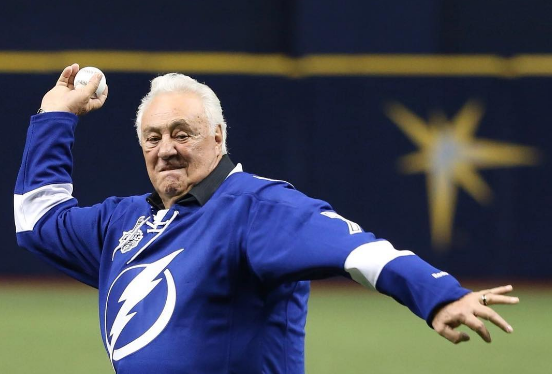
Philip Anthony “Phil” Esposito was born on February 20, 1942, in Sault Ste. Marie, Ontario. He was the son of Patrick (“Pat”) and Frances Esposito. Both parents were of Italian heritage; Patrick Esposito had emigrated from Italy and worked as a laborer at the Algoma Steel mill in Sault Ste. Marie.
The Esposito family grew up in a blue-collar neighborhood of Sault Ste. Marie, a small steel-manufacturing town on Lake Superior. Phil was raised alongside his younger brother Tony (born 1943) and other siblings in this community.
Esposito spent his childhood in Sault Ste. Marie’s frigid winters, which provided abundant outdoor ice for skating and street hockey. He and Tony first learned to play hockey on a neighborhood park rink just across the street from their home.
Their father, Pat, later built an outdoor rink in the backyard complete with two apple trees serving as goalposts where the boys practiced from around ages four and three, respectively.
The long Canadian winters meant that natural ice was typically available for much of the year; Tony later noted that roughly five months of winter ice were common in the Soo. In this way, Phil and his brother spent countless hours skating on frozen ponds and community rinks in and around Sault Ste. Marie.
Esposito attended local schools in Sault Ste. Marie (for example, King Edward School). Even as a boy, hockey was his passion he would often hurry home from class to play on the outdoor ice.
According to family recollections, Phil and Tony regularly dashed home from school and skated until suppertime; their mother Frances would even lay newspapers under their skates so they could eat dinner still wearing their hockey gear.
Their father became part of the routine as well: he would watch the games from the snowbanks, and the boys had a family rule that if they won a game he would drive them home, but if they lost they had to walk back on their own.
| Important Fact | Verified Details |
| Phil Esposito Net Worth (2026) | No verified public net worth figure is available as of 2026. |
| Main Income Sources | Earned from NHL playing, management, and broadcasting roles. |
| NHL Career Length | Played 18 seasons in the National Hockey League. |
| Earnings Era Context | Played before modern high-salary NHL contracts. |
| Career Goals | Scored 717 goals in regular-season NHL play. |
| Career Points | Recorded 1,590 total NHL points. |
| Major Awards | Won multiple Art Ross and Hart Trophies. |
| Stanley Cup Wins | Won two Stanley Cups with the Boston Bruins. |
| Franchise Founder Role | Co-founded the Tampa Bay Lightning in 1992. |
| Broadcasting Career | Longtime radio analyst for the Tampa Bay Lightning. |
Phil Esposito Career
Philip “Phil” Esposito (born 1942) is a Canadian Hall-of-Fame ice hockey legend best known for his prolific scoring career and later work as a coach, executive and broadcaster.
He played 18 seasons in the NHL (1963–1981) with three Original Six teams the Chicago Black Hawks, Boston Bruins and New York Rangers.
In Boston Esposito won two Stanley Cup championships (1970 and 1972) and led the league in scoring in multiple seasons.
After retiring as a player, he moved into coaching and management (including serving as head coach and general manager of the Rangers) and ultimately co-founded the Tampa Bay Lightning franchise.
In recent decades Esposito has been a longtime radio color commentator for the Lightning, sharing his insights on every game.
Professional Playing Career In The NHL
Esposito’s NHL career began with the Chicago Black Hawks in 1963–64. In May 1967 he was traded to the Boston Bruins, where he became one of the league’s top centers.
Over the next eight seasons in Boston, he led the NHL in scoring five times and played on Stanley Cup–winning teams in 1970 and 1972. Notably, Esposito became the first player in NHL history to score 100 points in a season (achieving 126 points in 1968–69).
In the 1970–71 season he shattered single-season records by scoring 76 goals and recording 152 points. In November 1975, Boston traded Esposito to the New York Rangers, and he finished his playing career in New York (retiring after the 1980–81 season).
By the end of his career he had played 1,282 NHL games and totaled 717 goals and 1,590 points figures that rank seventh and twelfth in league history, respectively.

Career Achievements, Records & Honors
Esposito earned a remarkable list of individual honors during his playing career. He won the NHL’s scoring title (Art Ross Trophy) five times (1969 and 1971–1974) and was voted league MVP (Hart Memorial Trophy) twice (1969 and 1974).
He also captured the Lester B. Pearson Award (now known as the Ted Lindsay Award) as the NHL Players’ MVP twice, and played in ten NHL All-Star Games.
Esposito’s scoring accomplishments set numerous records he was the first player ever to reach 100 points in a season, and his totals of 76 goals and 152 points in 1970–71 were NHL single-season records at the time.
When he retired, his 717 career goals and 1,590 points were the second-highest totals in NHL history. For his on-ice achievements, Esposito was inducted into the Hockey Hall of Fame in 1984.
Transition To Coach & Team Executive
Immediately after ending his playing career, Esposito joined the coaching ranks. In the 1980–81 season he served briefly as an assistant with the Rangers and in 1986–87 took over as New York’s head coach.
Esposito also held the title of general manager of the Rangers beginning in 1986, managing all player personnel decisions for the club. He guided the team to a 24–19 record in his partial 1986–87 coaching stint.
Esposito continued as Rangers GM through 1988; on May 24, 1989 the organization announced he was being replaced as coach and general manager. The Rangers acknowledged that Esposito “has made many contributions to the franchise both as a player and as a general manager” during his tenure.
Retirement From Professional Ice Hockey
Esposito officially retired as an NHL player at the end of the 1980–81 season. In the years that followed, he remained active in the sport through coaching, management and broadcasting.
He eventually stepped away from team management late in the 1990s in October 1998, the Tampa Bay Lightning (which he co-founded) relieved Esposito of his executive duties. Following that departure, Esposito focused exclusively on his broadcasting career.
Post-Retirement Career: Coach & Team Executive Roles
In 1992 Esposito achieved his long-held dream of owning a hockey team by co-founding the NHL’s Tampa Bay Lightning. He was the franchise’s first president and general manager, responsible for assembling the roster and front office staff from scratch.
The Lightning organization and press have credited Esposito as “the man who brought the NHL to Florida,” noting that he lobbied for the expansion franchise, put the team together and sold the game to new fans.
Esposito led the Lightning’s hockey operations through the team’s formative years; the club won its first playoff berth in 1996. He left the Lightning’s management in 1998 when he was replaced as general manager, but his role in establishing the team is still honored in Tampa Bay.
Broadcasting Career With Tampa Bay Lightning
Since the late 1990s, Esposito has been a fixture in Lightning broadcasts. He joined the team’s radio booth as a color commentator and has spent well over two decades analyzing Lightning games.
The Tampa Bay Lightning note that “the radio color commentator often is heard sharing in-depth analysis while adding plenty of character to his input.” Esposito’s lively style and deep knowledge of the game are evident on air.
He is also known for his passion for hockey as he told the team on his 83rd birthday, “I love hockey… I would play tomorrow if I could, and that’s the truth.” In 2025 he marked his 25th season on the Lightning’s radio broadcasts, demonstrating the longevity of his second career.
Legacy & Long-Term Impact On Ice Hockey
Phil Esposito’s legacy in hockey is profound. He remains one of the NHL’s all-time elite scorers (717 goals and 1,590 points) and a two-time Stanley Cup champion, and he was enshrined in the Hockey Hall of Fame in 1984.
He is particularly remembered for expanding the sport’s reach Tampa Bay erected a bronze statue of Esposito outside Amalie Arena in 2011, and the Lightning describe him as a franchise “pillar” who truly brought the NHL to Florida.
Esposito is routinely honored at Lightning events and by longtime fans; the team frequently highlights his passion and contributions even decades later.
As the Lightning’s owner Jeff Vinik once stated, Esposito is “the greatest owner in all of professional sports” for what he accomplished in establishing hockey in Tampa.
Through his on-ice records, championship teams, and success as a builder, Phil Esposito’s impact on the game endures.
Phil Esposito Net Worth
As of 2026, no reliable public net-worth estimate for Phil Esposito has been published that meets consistent verification standards. He derives income from his long career as a professional ice hockey player, followed by work as a team executive, coach, and broadcaster after retirement from the NHL.
His wealth primarily comes from player earnings during his career, media roles as a hockey analyst, public speaking engagements, and long-term involvement in hockey organizations. Forbes, Bloomberg, and other major financial publications have not confirmed any valuation, and available online figures remain unverified and inconsistent.
FAQs
Who Is Phil Esposito?
Phil Esposito is a retired Canadian professional ice hockey player and Hockey Hall of Famer. He is widely regarded as one of the most dominant goal scorers in NHL history.
What Teams Did Phil Esposito Play For In The NHL?
Phil Esposito played for the Chicago Black Hawks, Boston Bruins, and New York Rangers. His most successful years came with the Boston Bruins.
How Many Goals Did Phil Esposito Score In His NHL Career?
Phil Esposito scored 717 goals in regular-season NHL play. At the time of his retirement, this was the second-highest total in league history.
Did Phil Esposito Win The Stanley Cup?
Yes, Phil Esposito won two Stanley Cup championships. Both titles came with the Boston Bruins in 1970 and 1972.
Is Phil Esposito In The Hockey Hall Of Fame?
Phil Esposito was inducted into the Hockey Hall of Fame in 1984. The induction recognized his scoring records, awards, and overall impact on the game.
What Did Phil Esposito Do After Retiring As A Player?
After retiring, Esposito worked as a coach, general manager, and team executive. He later became a long-time radio color commentator for the Tampa Bay Lightning.
Latest Articles
Popular Articles