How Much Was Peggy Lee Worth When She Died?
A calm, factual look at Peggy Lee Fortune, explaining how she earned her money, her royalties, legal wins, and why no exact net worth was confirmed.
Jan 22, 202684 Shares28K Views
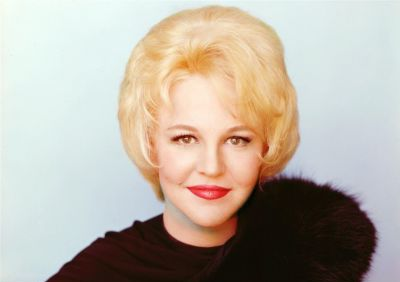
Norma Deloris Egstrom (later known as Peggy Lee) was born on May 26, 1920, in Jamestown, North Dakota. She was the seventh of eight children born to Marvin and Selma Egstrom, who were both of Scandinavian descent. Her mother Selma died when Norma was four years old.
Her father, a railroad station agent, then married the family’s housekeeper, Minnie “Min” Schaumber. Accounts describe Min as cold and abusive, making Norma’s early home life very difficult.
In 1934 the Egstrom family moved to Wimbledon, North Dakota, where Marvin Egstrom became the agent at the Midland Continental Railroad Depot. Norma assisted her father at the depot and attended the local school. She graduated from Wimbledon High School in 1937, at age 17.
Music was a central part of Norma’s youth. Local histories report that she “sang before she could talk,” and by age eight she had told others she would become a singer. She sang and played piano in church from an early age, and in high school she performed in her Lutheran church choir and the school Glee Club.
As a teenager she also sang with local dance bands and on North Dakota radio stations (at Valley City’s KVOC and Jamestown’s KRMC). These early musical activities gave her important vocal training from a young age.
| Important Fact | Information |
| Birthday | Born Norma Deloris Egstrom in 1920. |
| Profession | American jazz and pop singer, songwriter, and actress. |
| Early Life | Lost her mother young; faced a difficult childhood. |
| Career Breakthrough | Discovered by bandleader Benny Goodman in 1941. |
| Famous Songs | Known for “Fever” and “Why Don’t You Do Right.” |
| Songwriting Role | Wrote or co-wrote over 200 songs. |
| Disney Work | Co-wrote Lady and the Tramp songs and voiced characters. |
| Net Worth 2026 | No verified public net worth figure exists. |
| Legal Settlement | Won a multi-million-dollar Disney royalty case. |
| Major Honors | Grammy winner and Lifetime Achievement recipient. |
Peggy Lee Career
Norma Deloris Egstrom (1920–2002), known professionally as Peggy Lee, was an American jazz and pop singer, songwriter, and actress whose career spanned nearly seven decades. Renowned for her sultry, understated vocal style and sophisticated songwriting, Lee recorded over a thousand master takes and wrote or co-wrote hundreds of songs. She broke new ground as one of the first major female singer-songwriters in popular music.
Lee’s body of work included lasting hits like “Why Don’t You Do Right” and “Fever,” as well as her celebrated contributions to Walt Disney’s Lady and the Tramp. During the 1940s and 1950s she was one of Capitol Records’ biggest stars, and she later joined Decca Records before returning to Capitol, spending decades as a recording artist.
In addition to her music career, Lee achieved acclaim in Hollywood: her dramatic turn in Pete Kelly’s Blues(1955) earned her an Academy Award nomination. By the end of her life, Lee had received numerous awards, including a Grammy and a Grammy Lifetime Achievement Award, and was widely regarded as a pioneering female vocalist and songwriter in American popular music.
Early Professional Career & Musical Beginnings
Peggy Lee began singing professionally while still a teenager in North Dakota. At age 16 she started appearing on local radio stations (first at Valley City’s KOVC, then on WDAY in Fargo), earning just enough to keep performing. A station program director suggested changing her name from Norma Egstrom to Peggy Lee, and she began billing herself as Peggy Lee in 1937.
She cut her first small records with a regional dance band and moved briefly to Hollywood in 1938, but returned to the Midwest to work with touring bands. Lee’s big break came in 1941 in Chicago, when legendary bandleader Benny Goodman heard her sing at a nightclub and hired her as the female vocalist for his swing band.
With Goodman’s orchestra she recorded songs like “I Got It Bad (And That Ain’t Good)” and “Winter Weather,” but it was the 1942 recording of “Why Don’t You Do Right” that became her first major hit, selling over a million copies and making Lee nationally famous. In 1943 Lee married Goodman’s guitarist Dave Barbour and left the band, briefly retiring from music to focus on her personal life.

Peak Career Years As A Jazz & Pop Icon
Lee returned to music in the mid-1940s and quickly established a sensational solo career. She signed with Capitol Records in 1945 and almost immediately began accumulating hit recordings. Among her top-charting singles of the late 1940s were “It’s a Good Day” (1946) and “Waiting for the Train to Come In” (1946), but her biggest early hit was “Mañana (Is Soon Enough for Me)” (1948), a Caribbean-tinged song she co-wrote with Barbour that sold over two million copies and spent nine weeks at No. 1.
Lee’s warm, whispery vocal style set her apart during this era, and she became a fixture of pop and jazz radio. In the 1950s Lee continued to dominate as a female vocal star. After a stint at Decca Records (where she recorded hits like the jazz standard “Lover” in 1952), she returned to Capitol and released classic records throughout the decade.
Two signature songs from this period were “Fever” (1958), featuring a spare arrangement of drums and finger snaps that showcased her cool vocals, and “I’m a Woman” (1963), a humorous female-empowerment anthem that earned a Grammy nomination. Lee’s albums in the 1950s and early 1960s often featured lush string or big-band arrangements by arrangers like Nelson Riddle and Benny Carter.
She became known for creating entire concept albums blending jazz and pop. Even as musical tastes shifted, Lee remained a charting artist: she notably became the first woman to score a Top-10 hit in each of three decades when “Is That All There Is?” reached the pop charts in 1969 (earning her a Grammy for Best Contemporary Vocal Performance).
Songwriting & Creative Contributions To Music
A defining feature of Lee’s career was her songwriting and creative control. She wrote or co-wrote an unusually large share of her material. In the 1940s she co-authored many of her own early hits with Dave Barbour, including the playful songs “It’s a Good Day” (1946) and “I Don’t Know Enough About You” (1945).
Lee’s witty, sophisticated lyrics often reflected personal experience and humor, helping to establish her as a self-contained artist rather than a mere interpreter. During the 1950s and 1960s she expanded her collaborations to a wider range of composers, working with jazz greats like Duke Ellington and emerging talents like Quincy Jones and Cy Coleman.
She also took on ambitious projects beyond individual songs. Most notably, Lee co-wrote the entire score for Disney’s 1955 animated feature Lady and the Tramp(with composer Sonny Burke), creating memorable songs such as “Bella Notte,” “The Siamese Cat Song,” and “He’s a Tramp.”
In that film she even provided the voices for multiple characters (including the human Darling and the dogs Peg, Si, and Am). Lee’s role on Lady and the Trampdemonstrated her dual talents as a lyricist and performer.
Throughout her career, she was deeply involved in arranging and producing her records; she often took charge of vocal arrangements, recording sessions, and even stage presentation. By the end of her career Lee had published over 200 songs of her own (some sources count around 270), establishing her as one of the most prolific songwriter-performers of her era.
Film, Acting & Cross-Industry Career Work
In addition to music, Peggy Lee maintained a notable presence in film and other entertainment fields. She appeared in several Hollywood movies, usually in roles that showcased her singing. In 1952 she co-starred in The Jazz Singer(a musical remake of the Al Jolson story) opposite Danny Thomas, performing the song “This Is a Very Special Day” on screen.
Her most significant acting role came in 1955 with the Warner Bros. musical drama Pete Kelly’s Blues, in which she played Rose Hopkins, a troubled jazz singer. Lee’s performance earned her an Academy Award nomination for Best Supporting Actress – a rare acting honor for a jazz singer – and an Audience Award as a promising female star.
She also appeared in films and short subjects in the 1940s and 1950s such as Stage Door Canteen(1943) and Feudin’, Fussin’ and A-Fightin’(1948), generally as a musical performer.
Lee’s work with Walt Disney on Lady and the Trampbrought her into animation and children’s entertainment as well. Beyond providing songs and voices, she later lent her Hollywood clout to advocate for performers’ rights in the entertainment industry (notably winning a contract dispute over Disney in the 1990s).
In television, Lee made guest appearances on variety shows and specials throughout her career, often performing her hits. By bridging jazz clubs, pop recordings, film soundtracks, and animation, she forged a multifaceted career that crossed genre lines and media.
Major Career Achievements, Awards & Honors
Peggy Lee received numerous industry accolades over her long career. In music, she was a perennial award nominee: she earned 13 Grammy Award nominations, winning one in 1969 for Best Contemporary Female Vocal Performance for “Is That All There Is?”.
In recognition of her lifetime contributions, she was awarded the Grammy Lifetime Achievement Award in 1995. Lee was also inducted into the Songwriters Hall of Fame in 1999, honoring the hundreds of songs she authored or co-authored.
Her Hollywood recognition included the nomination for an Academy Award in 1956 for her supporting role in Pete Kelly’s Blues. In 1960 she received a star on the Hollywood Walk of Fame for recording, cementing her status as a pop music icon.
She garnered many other honors: for example, she won the ASCAP Pied Piper Award, the Songwriters Guild President’s Award, and the Society of Singers’ Ella Award for lifetime achievement. In her home state of North Dakota, Lee was given the Rough Rider Award (the state’s highest civilian honor) in 1975.
Throughout her career, she accumulated over one hundred charted singles on the jazz and pop charts, reflecting her enduring popularity.
Final Career Years & Last Professional Work
In her later years Peggy Lee gradually reduced her public performances due to health issues but remained active in music. After continuing to tour in the 1970s and 1980s, she recorded her final studio album Moments Like Thisin 1992 with Chesky Records; it was her 50th album and marked the end of her recording career.
Lee also stood up for artists’ rights late in life: in 1988 she sued the Walt Disney Company for breach of contract over Lady and the Trampsong royalties and ultimately won a multimillion-dollar verdict in 1992.
Despite diabetes and other ailments, Lee continued performing live into the 1990s, often from a wheelchair when necessary. Her last major concert engagement was at New York’s Carnegie Hall in June 1995, where she headlined a jazz program.
The public saw less of her after the mid-90s as she gradually retired from music. Peggy Lee passed away on January 21, 2002, at age 81. By the time of her death, she had maintained a musical career that few others of her generation matched in longevity or variety.
Enduring Legacy & Influence After Her Death
After her death, Peggy Lee’s influence on music continued to grow. Critics and historians regard her as a pioneering female artist who redefined jazz and pop singing. She is often cited as an inspiration by later generations of singers – from traditional jazz vocalists to modern pop and R&B performers – for her impeccable phrasing, sultry tone, and interpretive skill.
Contemporary artists such as Diana Krall, k.d. lang, and even pop stars like Madonna and Billie Eilish have acknowledged her influence on their own approaches to songcraft. Lee’s recordings remain in circulation, and many of her interpretations (notably “Fever” and “I’m a Woman”) have become jazz and pop standards covered by countless singers.
In media and advertising, her voice and music appear regularly, keeping her work familiar to new audiences. Institutions have continued to honor her: for example, the Recording Academy’s Grammy Museum held events celebrating her centennial in 2020.
Peggy Lee’s legacy also lives on through educational programs and tribute concerts that highlight her role as a trailblazer for women in music. In sum, her lasting impact is seen in the vibrant career paths of performers she influenced and the enduring popularity of the sophisticated, emotionally nuanced style she championed.
What Was Peggy Lee’s Net Worth At The Time Of Her Death?
At the time of death, no reliable public net worth estimate for Peggy Lee has been published. Lee’s wealth primarily derived from her long career as a jazz and popular music singer, songwriter, composer and actress, with income from record sales, songwriting royalties, concert tours and film roles.
She also earned income from film soundtracks and voice performances, including Disney’s Lady and the Tramp, which led to a multi-million-dollar royalty settlement in 1991. No official figure has been confirmed by major outlets like Forbes or Bloomberg, so any reported net worth remains unverified.
FAQs
Who Was Peggy Lee?
Peggy Lee was an American jazz and pop singer, songwriter, and actress. She was known for her understated vocal style and long, influential career in popular music.
What Was Peggy Lee’s Real Name?
Peggy Lee was born Norma Deloris Egstrom. She adopted her stage name early in her professional career.
When And Where Was Peggy Lee Born?
She was born on May 26, 1920, in Jamestown, North Dakota. She spent her early years in small towns across the state.
What Made Peggy Lee Famous?
She gained national recognition after joining Benny Goodman’s orchestrain the early 1940s. Her recording of “Why Don’t You Do Right” became her first major hit.
Was Peggy Lee Also A Songwriter?
Yes, she wrote or co-wrote more than 200 songs. This made her one of the earliest prominent female singer-songwriters in popular music.
Latest Articles
Popular Articles