What Was Mel Tormé’s Net Worth At The Time Of His Death?
A clear breakdown of Mel Tormé Net Worth, including career earnings, royalties, and how his finances evolved before his death.
Jan 27, 202674 Shares73.5K Views
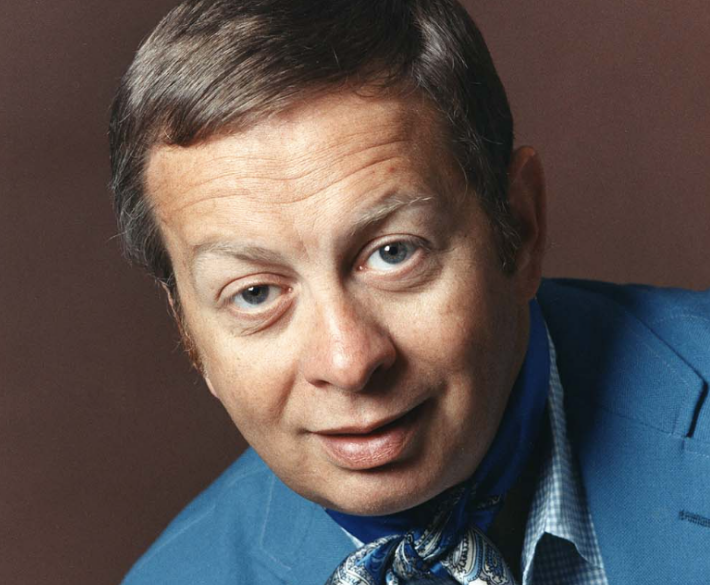
Melvin Howard Tormé was born on September 13, 1925, in Chicago, Illinois. He was the son of Jewish-Russian immigrant parents; his father, William Tormé, ran a small dry goods business selling butter, eggs and other goods, and his mother Sophie, sometimes recorded as Sabina, played piano and demonstrated sheet music at a retail store.
The family’s original surname was Torma, later changed to Tormé by an immigration official. Raised on Chicago’s South Side, the Tormés lived in a largely working-class, African-American neighborhood, then a center of jazz culture.
Music was a constant presence at home: Tormé later recalled that after dinner his family often gathered on the front stoop to sing together, with his grandfather singing in Hebrew and relatives playing ukuleles. He grew up alongside a sister named Myrna, after actress Myrna Loy.
Tormé showed musical aptitude very early. He began singing by age three and took up piano and drums in childhood. In school he played drums in the drum-and-bugle corps, reflecting his early instrumental training.
By his high school years, Tormé’s focus had turned to jazz: he later said that in high school he was especially drawn to the big-band sounds of Duke Ellington, Artie Shaw and Benny Goodman. During this period he continued studying drums and piano and even played in the high school band, alongside classmates such as Steve Allen.
His formal education concluded when he graduated from Hyde Park High School in Chicago in 1944, by which time he had been immersed in the city’s rich musical environment and family tradition of song.
| Important Fact | Information |
| Full Name | Melvin Howard Tormé |
| Date & Place of Birth | September 13, 1925, Chicago, Illinois |
| Professional Identity | American jazz singer, composer, arranger, drummer, and actor |
| Nickname | Known as “The Velvet Fog” |
| Signature Composition | Co-writer of “The Christmas Song” (1945) |
| Chart Achievement | “Careless Hands” reached No. 1 on Billboard (1949) |
| Recording Milestone | California Suite was Capitol Records’ first 12-inch LP |
| Major Awards | Two Grammy Awards; Lifetime Achievement Award (1999) |
| Television Recognition | Emmy-nominated; recurring guest on Night Court |
| Net Worth Status | No verified public net worth figure available |
Mel Tormé Career
Melvin Howard Tormé (1925–1999) was an American jazz singer, composer, arranger, drummer and actor whose professional career spanned nearly seven decades. A Chicago native, he achieved early fame as a child performer and went on to record dozens of albums, lead bands and vocal groups, and compose hundreds of songs.
Tormé’s smooth baritone and masterful scat singing earned him the lifelong nickname “The Velvet Fog.” He bridged popular and jazz music, performing standards and bebop with equal skill. Over his lifetime he received multiple industry honors – including two Grammy Awards and a posthumous Grammy Lifetime Achievement honor – and even a star on the Hollywood Walk of Fame.
Early Musical Career & Child Prodigy Years
Tormé began performing professionally as a young child. At age four he sang onstage at Chicago’s Blackhawk restaurant, and by age six he was appearing in vaudeville shows. As a boy he worked steadily in radio drama, acting on serials such as Little Orphan Anniethrough the 1930s.
Musical talent came early: he played drums in a school band and at 15 he published his first song, “Lament to Love” (later a hit recording for Harry James). In his mid-teens Tormé joined bandleader Chico Marx as a drummer, singer and arranger.
(Marx was a friend of his family who hired the 16-year-old to fill multiple roles in the orchestra.)
In the mid-1940s Tormé moved into film and formed his first vocal group. He made his movie debut in 1943 in the musical Higher and Higher(also featuring Frank Sinatra).
Around the same time he organized a jazz vocal quartet called the Mel-Tones, serving as the lead singer and arranger. The Mel-Tones recorded for major labels and had several popular songs during World War II.
After the Mel-Tones disbanded in 1946, Tormé launched a solo career focusing on popular ballads and jazz standards.
Professional Growth As A Jazz Singer & Performer
After leaving the Mel-Tones, Tormé built a steady solo career throughout the late 1940s and 1950s. In 1949 his Capitol Records single “Careless Hands” became a #1 hit on the Billboard charts, and Capitol chose his album California Suite(also released that year) as the label’s first long-playing record.
He recorded a string of popular songs and jazz albums in the early 1950s, including a highly regarded series with arranger Marty Paich and his Dek-Tette; these recordings are often cited as some of Tormé’s finest work.
During this period he performed at top venues such as New York’s Copacabana, Las Vegas nightclubs and jazz festivals. Audiences and critics admired his seamless phrasing and improvisational skill.
By the 1960s Tormé was adapting to changing musical trends. He covered contemporary pop and R&B-flavored tunes (for example, the 1962 hit “Comin’ Home Baby”) and recorded for many labels, though jazz had become less commercially dominant.
Tormé continued to perform vigorously, maintaining a grueling schedule of club, concert and tour dates. With the 1970s revival of vocal jazz, his career experienced renewed momentum. For example, in 1976 he recorded a concert album in London with the Royal Philharmonic Orchestra (a session he later cited as a personal favorite). Into the 1980s he performed internationally at large jazz festivals and continued releasing albums.
Songwriting, Composing & Musical Arrangements
In addition to singing, Tormé was a prolific songwriter and arranger. He co-wrote one of the most famous American standards, “The Christmas Song”(“Chestnuts roasting on an open fire”), with lyricist Bob Wells in 1945; the song was first recorded by the Nat King Cole Trio and has become an enduring holiday classic.
Over his lifetime Tormé composed or co-wrote more than 300 songs. His compositions ranged from jazz ballads like “Born to Be Blue”to multi-part suites (he created the suite California Suitefor his 1949 album).
He also wrote music for stage and screen; for instance, the song “County Fair”(with Bob Wells) appeared in the Disney film So Dear to My Heart(1949).
Though he had no formal academic training, Tormé taught himself arranging. With guidance from friends and collaborators (such as the mother of Marty Paich), he learned to write his own charts for big bands, small ensembles and even orchestras.
As a drummer himself, he often arranged percussion parts for his bands and would sometimes sit in on drums during performances.
Major Career Achievements & Industry Recognition
Tormé achieved major milestones both on the charts and in recording history. As noted above, his single “Careless Hands” (1949) was his only #1 pop hit.
In the LP era he helped break new ground: Capitol Records released his California Suiteas its first 12-inch album.
Throughout the 1950s and ’60s he continued to score chart entries – for example, “Mountain Greenery” (1956) and “Comin’ Home Baby” (1962) – and recorded dozens of albums that showcased his evolving style.
His mid-1950s work with the Marty Paich Dek-Tette are widely regarded as classic vocal jazz recordings.
In the 1980s Tormé’s career enjoyed a notable renaissance. A 1982 live album with pianist George Shearing (An Evening with George Shearing and Mel Tormé) became a best-seller on the jazz charts and introduced him to a new generation of listeners.
This marked the beginning of a highly productive period on the Concord Jazz label, during which he recorded several acclaimed albums (many with Shearing or the Rob McConnell Boss Brass big band). By the end of his recording career he had become known as a leading interpreter of the Great American Songbook.
Acting Career & Work In Film And Television
Tormé’s career in entertainment also included film and television. In addition to his early movie roles (Higher and Higher, Good News(1947) and Words and Music(1948)), he appeared as a singer-actor on TV.
In 1951–52 he hosted his own variety series on NBC. He later earned an Emmy nomination (1957) for Best Supporting Actor for his performance in the Playhouse 90television drama “The Comedian.”
In the 1960s he contributed songs and arrangements to The Judy Garland Show(1963–64), even guest-starring on that series. Decades later, Tormé became familiar to a new generation via television cameos and publicity appearances. He famously appeared several times as himself on the NBC sitcom Night Courtduring the 1980s, portraying Judge Harry Stone’s idol.
He also guest-starred on The Tonight Show, Late Nightand Seinfeldin the 1980s–’90s. In 1988 he provided the singing voice for Daffy Duck in the Warner Bros. cartoon short “The Night of the Living Duck.” Additionally, he hosted one short-lived TV series (It Was A Very Good Year, 1971) and remained a popular interview guest on talk shows.
Musical Style, Influence & Artistic Legacy
Tormé was renowned for his rich, agile vocal style and musical versatility. Early in his career his smooth, mellow tone and perfect diction earned him the “Velvet Fog” moniker.
As he matured he explored more improvisational territory: over time his voice deepened and he became a master scat singer and jazz interpreter on par with his idol Ella Fitzgerald. He continually worked to refine his technique, famously insisting on proper rest and vocal care before performances.
According to those who knew him, he absorbed influences from many genres (including classical music), and later wrote a book (My Singing Teachers) detailing the performers he admired. Fellow vocalists and critics routinely praised him; for example, Frank Sinatra and Bing Crosby both offered high praise, with Crosby reportedly calling Tormé “the best musical entertainer I’ve ever seen.”
Through his recordings and performances, Tormé left a lasting artistic legacy: he helped shape mid-20th-century jazz singing and influenced generations of vocalists who followed.
Awards, Honors & Critical Acclaim
- Grammy Awards:Two-time winner for Best Jazz Vocal Performance, Male (1983: An Evening with George Shearing and Mel Tormé; 1984: Top Drawer). He also earned a total of 14 Grammy nominations over his career.
- Grammy Lifetime Achievement:Awarded posthumously in 1999 in recognition of his extensive contributions to music.
- Emmy Nomination:Nominated for Best Supporting Actor (Television) for Playhouse 90: “The Comedian”(1957).
- Hollywood Walk of Fame:A star on the Walk of Fame (Recording category), dedicated in 1981, honors Tormé’s impact as a recording artist.
- Other Honors:He was often lauded by peers and critics throughout his career. (For instance, his Christmas standard and many albums continue to receive airplay and praise from jazz historians.)
Lasting Impact On Jazz Music History
Mel Tormé’s contributions have secured him a place among the great jazz vocalists of the 20th century. His interpretations of the American Songbook and his original compositions remain in active circulation.
As a stylist, he bridged the swing-era tradition and modern jazz techniques, bringing sophisticated phrasing and personality to popular songs.
His greatest creative gift, “The Christmas Song,”has become an annual tradition, but beyond the holidays his recordings continue to influence singers who value tonal beauty and improvisational skill.
Jazz historians note that Tormé’s work exemplifies the artistry of vocal jazz, and many modern singers cite him as an inspiration.
Decades after his last performance, Mel Tormé is remembered as a consummate musician whose technical mastery and genuine musicality left a lasting mark on jazz and popular music history.
How Much Was Mel Tormé Worth When He Died?
At the time of death, no reliable public net worth estimate for Mel Tormé had been published or reported. Tormé earned income through his long career as a jazz vocalist, composer, arranger, drummer and actor, with earnings from album sales, concert performances, acting roles and songwriting royalties (notably for enduring standards like “The Christmas Song,” which he co-wrote).
Since no figure is confirmed by major financial publications such as Forbes or Bloomberg, any specific net worth claims remain unverified and speculative.
FAQs
Who Was Mel Tormé?
Mel Tormé was an American jazz singer, composer, arranger, drummer, and actor. He was known for his smooth baritone voice and his ability to bridge popular music and jazz.
Why Was Mel Tormé Called “The Velvet Fog”?
He earned the nickname “The Velvet Fog” early in his career because of his exceptionally smooth vocal tone and controlled phrasing. The nickname remained associated with him throughout his life.
What Is Mel Tormé Best Known For?
He is best known for co-writing “The Christmas Song (Chestnuts Roasting on an Open Fire)” and for his influential jazz vocal recordings. His work helped define mid-20th-century vocal jazz.
Did Mel Tormé Write “The Christmas Song”?
Yes, Mel Tormé co-wrote “The Christmas Song” in 1945 with lyricist Bob Wells. The song became a holiday standard after being recorded by Nat King Cole.
Did Mel Tormé Win Any Grammy Awards?
Yes, he won two Grammy Awards for Best Jazz Vocal Performance, Male. He also received a Grammy Lifetime Achievement Award in 1999.
What Type Of Music Did Mel Tormé Perform?
Mel Tormé primarily performed jazz and traditional pop standards. He was also known for his skill in scat singing and jazz improvisation.
Latest Articles
Popular Articles