Meet 14 Of The Most Notorious Indiana Serial Killers
Explore the chilling profiles of 14 notorious serial killers from Indiana. Get details on their backgrounds, methods, and criminal records.
Jun 17, 202530.8K Shares628.6K Views
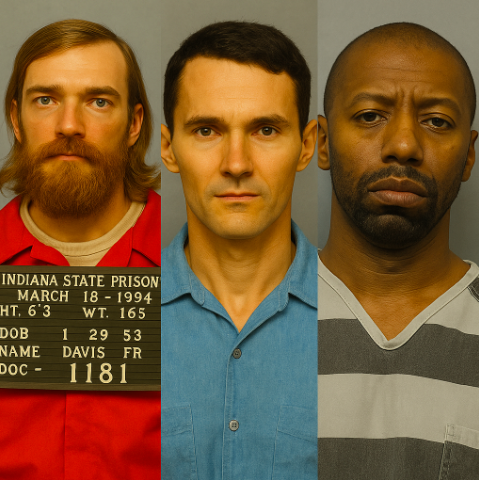
Indiana may be known for its quiet towns and friendly communities, but behind that peaceful image lies a darker history. Over the years, the state has been home to some of the most chilling serial killers in America. These are not just stories from the past, they are real events that shook neighborhoods and left lasting scars.
In this article, you’ll discover 14 of the most notorious serial killers linked to Indiana. From shocking crime scenes to disturbing patterns, each case reveals how ordinary places can hide terrifying secrets. Whether driven by obsession, anger, or a complete lack of remorse, these killers left behind a trail of fear that still haunts the state today.
Howard Allen
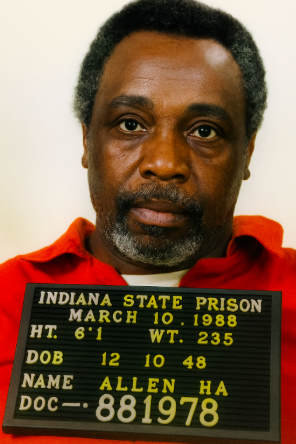
Howard Arthur Allen was born on February 10, 1949, in Indianapolis, Indiana, and grew up as one of eight children under an impoverished single mother. Struggling academically, Allen attended special education classes and left elementary school reading at a second grade level. Despite scoring 104 on an IQ test that suggested average intelligence, educators noted his difficulty with language and understanding consequences.
Allen committed at least three confirmed murders between 1974 and 1987, targeting elderly victims during home invasions. His known crimes include beating to death 85 year old Opal Cooper in August 1974, killing 87 year old Laverne Hale in May 1987, and murdering 74 year old Ernestine Griffin in July 1987 by stabbing her with a kitchen knife and crushing her skull with a toaster. Allen’s violent pattern showed no unique ritual or media assigned nickname; his attacks were brutal but lacked any consistent signature. He was arrested on August 4, 1987, after Ernestine Griffin’s camera and a note led police to him.
At trial, Allen received a death sentence on June 11, 1988, for Griffin’s murder, with additional significant terms for robbery, theft, and manslaughter. He remained on death row until 2012, when his sentence was reduced to 60 years in prison after legal challenges regarding mental disability. He died on June 5, 2020, at the Wabash Valley Correctional Facility in Indiana.
Herb Baumeister (I‑70 Strangler)
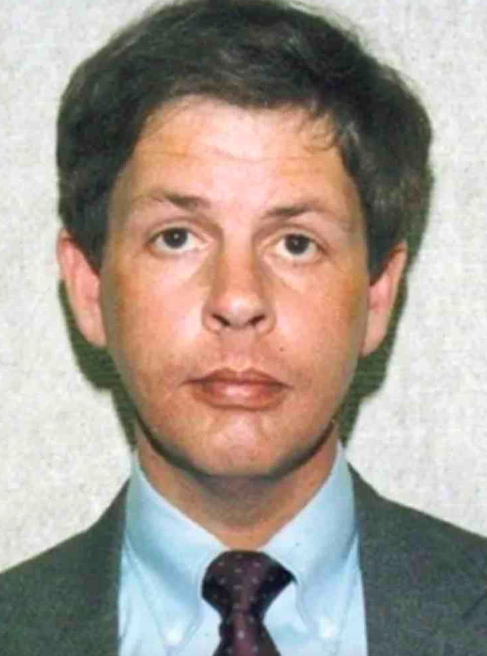
William Herbert “Herb” Baumeister (born April 7, 1947) grew up in an affluent Indianapolis suburb as the oldest of four children with a father who was a respected anesthesiologist. He appeared to have a largely normal early life, but during adolescence, behaviors changed; in his adult years, he founded a successful thrift store chain in 1988. Starting in the 1980s, young boys and men, many last seen around gay bars, began disappearing. Between 1980 and 1991, at least 12 victims were confirmed, and authorities believe he may have killed up to 27. The victims were typically found naked or partially clothed, strangled, and dumped along I‑70 in Indiana and Ohio, often in ditches, rural streams, or gullies. Sex was not the primary motive; there was no known ritual or signature beyond the method and location of the killings.
Investigators suspected Baumeister when skeletal remains, nearly 10,000 in fragments, were uncovered at his Westfield, Indiana, property in 1996. Facing exposure, he fled to Canada and died by suicide on July 3, 1996. He was never formally arrested for the I‑70 killings, nor was there a trial or sentencing. His case remains unsolved and controversial, partly because no conviction was secured and hundreds of victim remains awaited identification. Public awareness grew due to a private investigator’s claims tying Baumeister to the I‑70 Strangler and media coverage of the remains found, but no film or book has definitively chronicled the case.
Eugene Britt
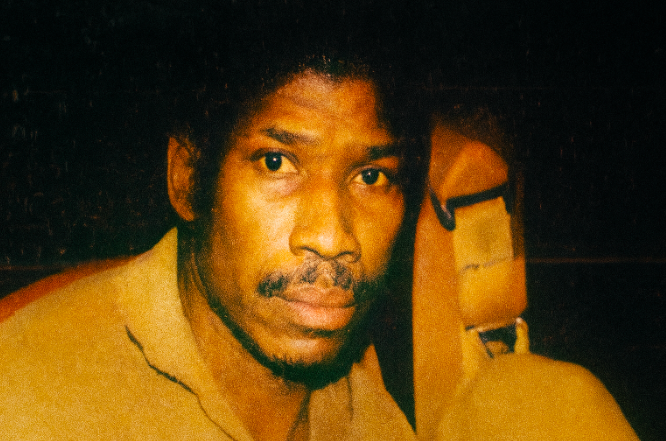
Eugene Victor Britt was born on November 4, 1957, in Gary, Indiana, into a large and impoverished household where both parents struggled with alcoholism. He dropped out of school at around age 14, lived on the streets, and began using drugs—at this time, signs of intellectual disability and unstable behavior were evident. In 1978, Britt was convicted of raping and assaulting a 17-year-old girl and given a 30-year sentence; he was paroled in August 1993 and returned to Gary. Shortly after, he lived in shelters, worked low-wage jobs, and spent his free time riding a bicycle around the city.
Between May and September 1995, Britt murdered at least seven girls and women—suspected in up to ten cases—mainly in Gary and Portage, Indiana. His modus operandi involved approaching victims from behind in isolated areas, raping, strangling them, and leaving their bodies in desolate locations; during interrogation, he claimed voices in his head ordered him to kill. He was arrested on November 3, 1995, after murdering 8-year-old Sarah Paulsen; police matched fibers from his Hardee’s uniform and he confessed to additional killings. Brutish strangulation defined his crimes, but no media nickname or ritual was recorded, and no trial included dramatic court moments—he pleaded guilty in stages through plea bargains.
In May 1996, Britt accepted a plea deal to avoid the death penalty and was sentenced to life in prison plus 100 years for the Paulsen murder. In 2006, he pleaded guilty to six more murders and a rape, obtaining an additional 245-year sentence after mental evaluations found him intellectually disabled. The court noted visible remorse when he wept and asked forgiveness on sentencing day . As of early 2025, Britt remains alive and incarcerated at Indiana State Prison in Michigan City.
Dean Corll
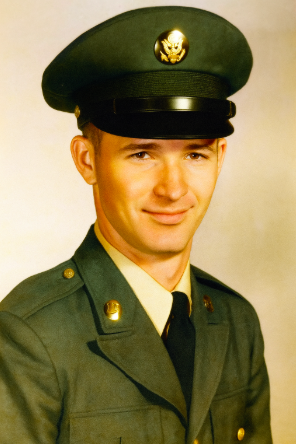
Dean Arnold Corll was born on December 24, 1939, in Fort Wayne, Indiana, and moved with his mother and brother to Pasadena, Texas, after his parents’ divorce. As a child, he was shy, serious, and withdrawn. He suffered rheumatic fever around age 7 and developed a heart murmur, which led doctors to advise against physical education. In the 1960s, Corll helped run his family’s candy business in Houston Heights, earning the nicknames “The Candy Man” and “Pied Piper” by giving free candy to local youth.
Between 1970 and 1973, Corll abducted, raped, tortured, and murdered at least 27 teenage boys and young men. He used candy, drugs, alcohol, or money to lure victims, often with the help of teenage accomplices David Brooks and Elmer Wayne Henley. His method involved restraining victims with handcuffs or rope on a plywood torture board, sexually abusing them, then killing them by strangulation or .22 pistol shots. Corll kept some keys from victims as trophies. There was no official trial for Corll; the crimes were fully exposed on August 8, 1973, when Henley fatally shot him inside Corll’s Pasadena home after being tortured.
Henley then led police to the mass burial sites, found in a boat shed, on beaches, and in woods, where authorities recovered 27 bodies. Dean Corll died by gunshot wounds to the chest, back, and lungs on August 8, 1973, from exsanguination after being shot by Henley. There were controversies over possible additional victims beyond those discovered. His crimes had a lasting cultural impact, shaping later true‑crime media coverage and public fear of stranger danger, and inspiring books, documentaries, and TV programs exploring the “Candy Man Murders”.
Frank Davis
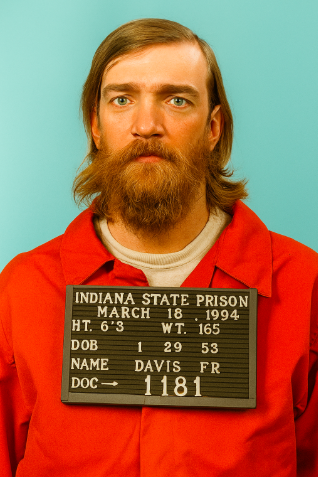
Frank R. Davis was born on January 29, 1953, and raised in Indiana. His childhood included time in a juvenile detention center, where, according to court records, he was sexually abused by an attendant and another inmate, an experience that later paralleled how he treated at least one of his victims.
Between 1971 and 1983, Davis raped and murdered three teenage boys aged 13 to 15. His known victims were 13‑year‑old Duane Bush in 1971, followed by 14‑year‑old Darrin Reed and 15‑year‑old Jeff Lopez in June 1983. His modus operandi involved befriending or confronting boys, often binding them with wire, sexually assaulting them, and strangling them, sometimes manually or with wire.
He had no widely known media nickname or ritual beyond his consistent pattern of binding, sexual assault, and strangulation. Davis’s crimes were discovered when two surviving victims identified him, and he subsequently confessed fully.
Arrested on June 22, 1983, Davis was charged in connection with four attacks—two murders and two attempted murders. In January 1984 he pled guilty to two murders and two attempted murders. He was sentenced to death for the two 1983 murders and received two consecutive 50‑year terms for surviving victims, totaling 220 years in prison after his death sentence was later reduced. Davis died of natural causes in prison on January 22, 2008, just days before his 55th birthday .
Cecil Henry Floyd
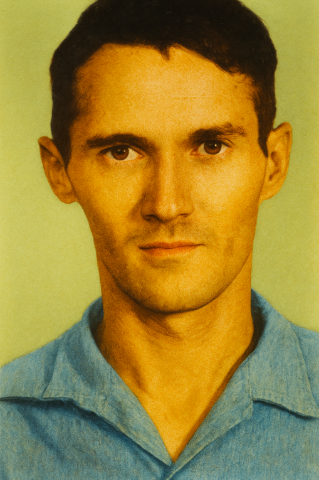
Cecil Henry Floyd was born in 1945 in Indianapolis, Indiana. He was the only child of Cecil Moses Floyd and Sarah Pearl Farlow. Not much is known about his childhood other than a minor traffic violation in 1959, when he was fined for careless driving and driving without a license. In 1971, he married Lorna Jean Kern, who later became his accomplice. Lorna claimed that Floyd abused her and her children, forcing her into marriage by threatening harm to her kids.
Floyd committed a series of robberies and murders across Indiana, Florida, Nebraska, and Kansas between 1973 and 1974. He and his wife killed at least six confirmed victims, though Floyd later confessed to eleven killings, these additional deaths remain unverified. His methods included shooting, stabbing, and bludgeoning, usually targeting robbery victims, he most often shot them during these crimes. There’s no known nickname or ritual characteristic attributed to him by police or media; the crimes appeared driven purely by robbery.
Floyd was arrested on July 24, 1974, after a crime spree was linked across multiple states. He was tried and received two life sentences without parole, one in Indiana and another in Nebraska. Details of his trial don’t highlight any particularly dramatic courtroom moments. Ultimately, Floyd died on June 17, 2011, from natural causes while still incarcerated in an Indiana prison.
William Henry Hance
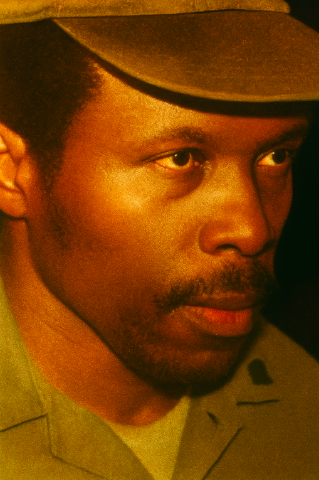
William Henry Hance was born on November 10, 1951, in Georgia and grew up in a troubled environment, though few specifics about his early childhood are publicly recorded. He later joined the U.S. Army and was stationed at Fort Benning in Georgia. Between 1977 and early 1978, Hance murdered at least three women, two were Black prostitutes (Gail Jackson, also known as Brenda Gail Faison, and Irene Thirkield) and one was a white soldier (Karen Hickman). He is suspected in a fourth killing in Indiana but was not charged for it. His method involved beating or bludgeoning the victims, followed by burial in shallow graves.
During the murders, Hance sent letters and calls to police using Army stationery, posing as a group called the “Forces of Evil,” in hopes of shifting blame to white vigilantes and exploiting racial tensions tied to a concurrent killer known as the Stocking Strangler. He was nicknamed the “Chairman of the Forces of Evil” by authorities. Hance was arrested on April 4, 1978, after investigators matched his handwriting, voice, and military alibi to the crimes. In December 1978, he was convicted in civilian court of Gail Jackson’s murder and sentenced to death; he also received a life sentence in military court for Thirkield’s murder (later overturned), and confessed to the Hickman killing.
Hance’s execution by electric chair took place on March 31, 1994, at the Georgia Diagnostic and Classification State Prison. His case sparked controversy over his mental capacity, his IQ ranged from 76 to 91, and allegations of racial bias during sentencing, including juror intimidation and racist remarks during deliberations. The Supreme Court declined his final appeal hours before execution. His story gained renewed attention through media; he was portrayed by Corey Allen in Netflix's Mindhunter Season 2, and his case has been featured in books and discussions on profiling, race, and capital punishment.
Leslie Irvin "Mad Dog Killer"
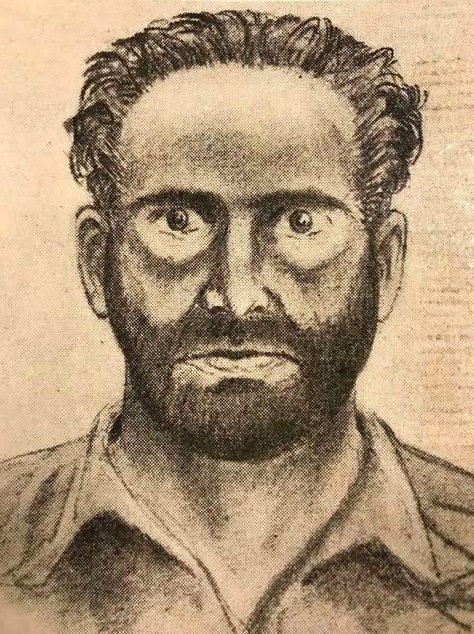
Leslie Irvin was born on April 2, 1924, in Evansville, Indiana. Information about his early childhood is limited, but he later attended Bosse High School, where he allegedly set several small fires. In 1945, he was convicted of armed robbery in Indianapolis and sentenced to 10–20 years; he served nine years before moving back to Evansville in 1954. Between December 1954 and March 1955, Irvin killed six known victims across Indiana and Kentucky. His victims included two women in business locations and a family of three, all bound, often kneeling, and shot execution style in the head with a .38 caliber revolver during robberies. He targeted people in vulnerable settings: a liquor store, a gas station, private homes, and farms.
Irvin earned the nickname “Mad Dog Killer” from the media and prosecutor, largely due to the brutality of his acts and the moment he was led into court on a chain like a dog. He was arrested on April 8, 1955, after boys identified his car at the scene of the Duncan family murders; police later found loot and weapon evidence linking him to the crimes. His 1956 conviction and death sentence for one murder were overturned by the U.S. Supreme Court in Irvin v. Dowd(1961), due to prejudicial publicity; he was retried in 1962, found guilty, and received a life sentence. Irvin died in prison on November 9, 1983, at Indiana State Prison from lung cancer. The case remains notable for its legal impact on venue fairness and media influence in criminal trials.
Alfred Knapp
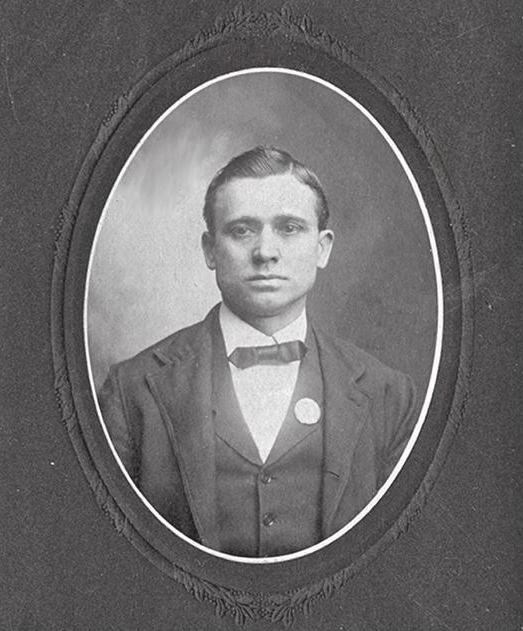
Alfred Andrew Knapp was born in 1863 in Terre Haute, Indiana, the son of Cyrus and Susannah Knapp. Information on his early childhood is limited. In adulthood, he was involved with the Fourth Christian Church and married four times. Between 1894 and 1902, Knapp killed at least five females, three women and two girls, in Ohio and Indiana. His victims included his second wife, Jennie Connors Knapp, and a child named Ida Gebhard. He strangled them and in at least one case, dismembered and dumped the body into the Great Miami River.
Known variously as the “Hamilton Strangler,” “Ohio Strangler,” and “Indianapolis Wife Strangler,” Knapp earned his nicknames from the brutality and geography of his crimes. He was arrested on February 25, 1903, after his wife Hannah Knapp went missing and her body was later discovered in the river following his confession. During his 1903 trial, his sister defended him by claiming mental instability, but he was found guilty of first-degree murder on July 16 and sentenced to death. Knapp was executed by electric chair at Ohio State Penitentiary on August 19, 1904. The sensational media coverage at the time made him one of the earliest celebrity serial killers, though today he remains largely forgotten.
Pleasant Pruitt
Pleasant Pruitt was born around 1840 in Edinburgh, Indiana, into a well-off Protestant family. He was considered intelligent and respectable by his community. Pruitt married his first wife, Mrs. Van Meter, and they had four children. In 1888, his first wife died suddenly of poisoning; the death was never officially linked to him, and the matter remained unsolved. A few years later, his second wife, Naomi Huffman, died after he allegedly accidentally shot her while cleaning a shotgun in 1896. Though the event raised suspicion and led to his arrest, the jury accepted his explanation and released him.
Pruitt married a third time to Winnie Berry. In October 1902, after repeated quarrels, he stabbed her twice in the heart and beat her severely. He left her body in their basement, grabbed a .38 caliber revolver, and shot himself in the head, falling upon his wife's corpse. His son found them and alerted authorities. He was never given an official nickname or known ritual pattern, and no traditional trial or sentencing took place—he committed suicide at the scene to evade justice. This ended a suspected pattern of murdering three wives over 14 years.
Orville Lynn Majors
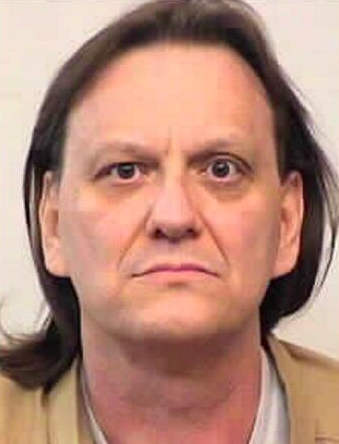
Orville Lynn Majors was born on April 24, 1961, in Linton, Indiana, the son of a coal miner. As a teenager, he cared for his ailing grandmother, an experience that led him to become a licensed practical nurse. He graduated from Nashville Memorial School of Practical Nursing in 1989 and worked at Vermillion County Hospital from 1993 to 1995. Family and friends described him as caring and friendly early in his nursing career, though his demeanor changed over time as he became irritable and began using methamphetamines, expressing hatred toward elderly patients.
Between 1993 and 1995, the hospital’s death rate skyrocketed from around 26 annual ICU deaths to over 100 when Majors was on duty. He was confirmed to have murdered at least six patients and may have harmed as many as 130 using lethal injections of potassium chloride and epinephrine. Staff referred to him as the “Angel of Death,” noting his signature of administering heart-stopping drugs to vulnerable elderly patients, sometimes with a gentle tap and comforting words before the fatal injection.
Majors was caught after a nurse supervisor noted the correlation between his shifts and the spike in deaths. An investigation led to exhumations and the suspension of his nursing license in 1995. He was arrested in December 1997, tried in 1999, convicted of six murders, and sentenced to 360 years in prison. Majors died on September 24, 2017, of heart failure while serving his sentence. The case drew national attention, influenced hospital oversight policies, and inspired documentaries such as License to Killand Angel of Death: A Hospital Horror.
Eric Dawon Matthews
Eric Dawon Matthews was born on May 3, 1974, in Indianapolis, Indiana. His troubled early life began at just age 3 when he was allegedly molested by an uncle. He got into small-time trouble frequently and was sent to psychiatric institutions, where he was convicted at age 10 of raping a staff member. Despite this history, he returned to Indianapolis, completed high school at Lawrence Central High School, and became known as charming but prone to violence. He began killing in June 1994, targeting two of his ex-girlfriends, Kenya Willis and Christina Darnell, in Indiana. Darnell disappeared after a violent argument, but Matthews faced no charges at the time due to lack of evidence and ambiguity over her mental health.
Matthews resurfaced in Louisiana in 1997, where he married Lashann Sylve. On May 18, 1998, he bound and killed her in their trailer, abducted his two stepchildren, killing infant James and releasing stepdaughter Rosalyn. While fleeing, he committed two rapes in a motel and a roadside area, attempted to kill both victims, but they survived. Arrested May 20, 1998, after police located Rosalyn but not James, his car contained the child; Matthews later admitted killing James. During the 2006 Louisiana trial, he pled guilty to second-degree murder as part of a plea deal that avoided the death penalty, resulting in life without parole. He is confirmed to have at least four murder victims and two rapes, with no recorded nickname or crime-scene ritual. There are no notable controversies or cultural portrayals tied to this case.
Christopher Peterson
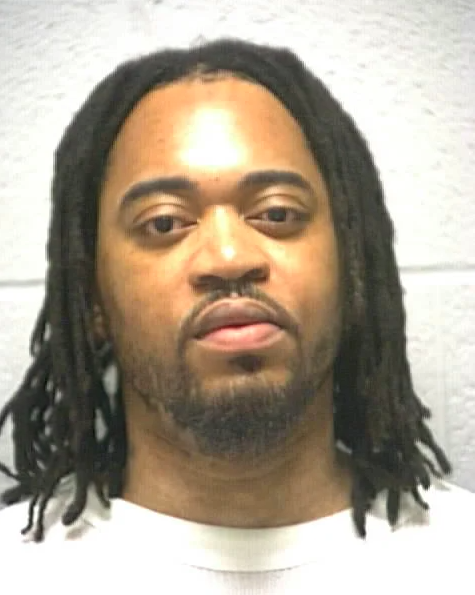
Christopher Peterson was born on January 20, 1969, in Gary, Indiana. Between October 30 and December 18, 1990, he killed at least four people and was acquitted in three other murders during what became known as the “Shotgun Killer” spree across multiple jurisdictions in northern Indiana. He used a sawed-off shotgun to shoot victims, often at their workplaces or in parked cars, targeting people at random without clear personal connection. There was no unique ritual or signature, though the brutality of the shotgun attacks led to widespread fear and the notable nickname.
Peterson was arrested in January 1991 after an unrelated mall robbery where he fled from police. Co-defendants Antwion McGee and Ronald Harris implicated him in several killings. His legal journey went through multiple trials: he was acquitted of three murders, convicted of four, initially sentenced to death, and then resentenced to 120 yearsin prison in 2004 after his death sentence was commuted. Controversies included racial tensions, initial eyewitnesses described a white suspect while Peterson is Black, the legality of his arrest evidence, allegations of coerced confession, and the use of all white juries early in the trials. His case highlighted systemic issues in criminal justice, but it has not yet inspired notable books or films. As of the latest records, he remains incarcerated under his 120 year sentence.
Darren Deon Vann
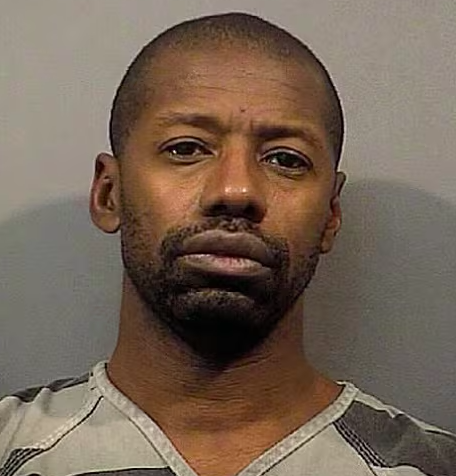
Darren Deon Vann was born on March 21, 1971, in Indiana. He served in the U.S. Marine Corps from 1991 until receiving an other-than-honorable discharge in 1993. He married in 1995 and divorced in 2011. In 2007, he was convicted of sexual assault in Texas and served time until July 2013. Shortly after his release, he returned to northwest Indiana, where he either stayed or traveled through for his later crimes.
Between 2013 and October 2014, Vann killed at least seven women—all victims were strangled. He selected vulnerable women, often involved in prostitution or living on society’s margins. His signature was disposing of their bodies in abandoned homes in Gary, Indiana. There was no other ritual. He was arrested on October 18, 2014, after the murder of 19‑year‑old Afrikka Hardy in a Motel 6 and police traced her phone records to him. During interrogation, he led officers to six bodies and confessed to the murders. He remained silent during his first court appearance, even after being held in contempt.
In May 2018, Vann pleaded guilty to seven counts of murder, avoiding the death penalty in exchange for seven concurrent life sentences without parole. Investigators continue to review cold cases in Indiana and other states, including Texas and North Carolina, for possible additional victims connected to Vann’s decades long history. He is currently incarcerated at Wabash Valley Correctional Facility.
Latest Articles
Popular Articles