Indiana’s Most Famous And Successful Football Players
From small towns to the pros, meet 22 football players from Indiana who became national icons. Get career insights and achievements in one place.
Jun 19, 202560.5K Shares976.2K Views
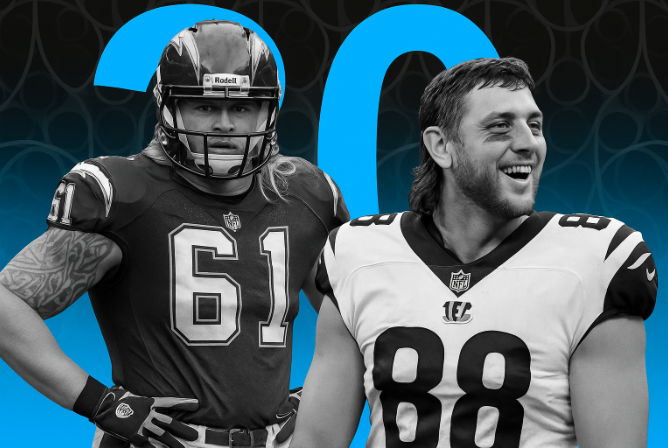
Indiana is known for its deep sports roots, and football holds a strong place in the state’s athletic history. From small towns to major cities, Indiana has produced a remarkable number of talented football players who have gone on to shine in college programs, the NFL, and beyond. These athletes have not only made their mark on the field but have also earned respect for their dedication, leadership, and impact on the game.
In this article, we highlight 22 standout football players from Indiana. Each of these names represents hard work, skill, and the drive to succeed at the highest levels of the sport. Whether they became Super Bowl champions, record-setters, or inspiring hometown heroes, their stories show why Indiana continues to be a strong force in American football.
George Taliaferro
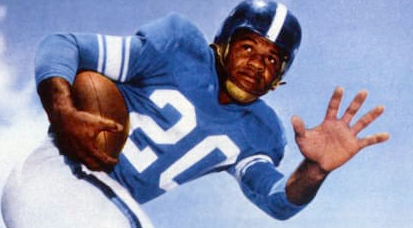
George Taliaferro (born January 8, 1927, in Gates, Tennessee; raised in Gary, Indiana) played as a halfback, with duties also including quarterback, defensive back, punter, and returner during his time at Indiana University and in the NFL. On the field, he was known for his speed, vision, and adaptability, capable of executing big plays like a 95-yard kickoff return and an 82-yard interception return during his freshman year with the Hoosiers. In the NFL, he played for several teams New York Yanks (1950–51), Dallas Texans (1952), Baltimore Colts (1953–54), and Philadelphia Eagles (1955) earning three Pro Bowl selections (1951–1953) and was the NFL kickoff-return yards leader in 1951.
Beyond his numbers 2,266 rushing yards, 1,300 receiving yards, and versatile passing statistics Taliaferro made history as the first African American ever drafted by an NFLteam, selected by the Chicago Bears in the 13th round of the 1949 draft, though he chose to sign with the AAFC's Los Angeles Dons instead. His legacy extends off the field as a civil-rights pioneer, a College Football Hall of Famer (inducted 1981), and a dedicated educator and advocate. He served as a dean, special assistant to the IU president, helped found Big Brothers Big Sisters in Indiana, and championed minority educational access. Taliaferro passed away from heart failure in Mason, Ohio, on October 8, 2018, at age 91.
Kris Dielman
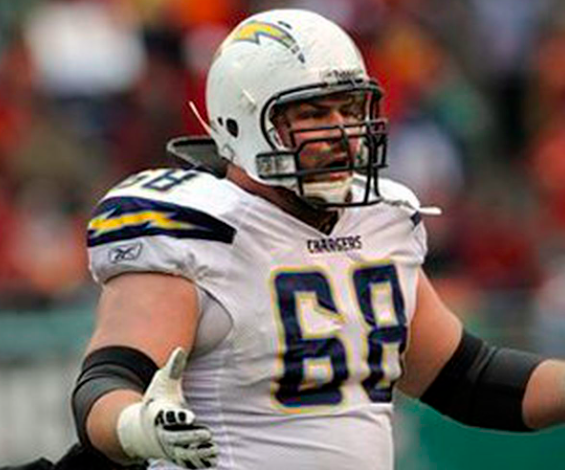
Born on February 3, 1981, in Goshen, Indiana, Kris Dielman played college football at Indiana University. After going undrafted in 2003, he signed with the San Diego Chargers and spent his entire nine‑year NFL career there (2003–2011). Originally converted from defensive line to left guard, Dielman became a key starter from 2005, playing in 120 games and starting 97. His primary role was as a powerful run-blocker and pass protector on the interior, helping the Chargers rush attack, especially in support of LaDainian Tomlinson’s record-breaking 2006 season. He earned notable recognition: four straight Pro Bowls (2007–2010), two second-team All-Pro honors (2008, 2009), and was named Chargers' Lineman of the Year three times. In 2007, he re-signed for six years ($39 M), choosing loyalty over a higher offer from Seattle.
Dielman’s standout strengths were his grit, consistency, and tough, hard-nosed style, earning nicknames like “enforcer” and “battering ram.” He helped lead the Chargers to four AFC West titles (2006–2009), missing just three games across six seasons as a starter. Known as a dependable leader, teammates credit him with bringing security and tough mentality to the line; quarterback Philip Rivers even called him “a guy you wish you had 53 of.” Forced to retire in early 2012 due to concussion concerns, he left a legacy as an old‑school, blue‑collar lineman who set high standards for toughness, loyalty, and team-first play.
Bob Griese
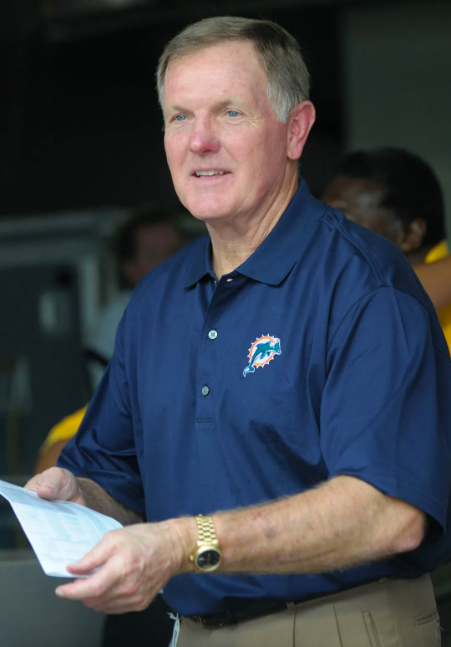
Bob Griese (born February 3, 1945, in Evansville, Indiana) played college football at Purdue University, where he earned All American honors in 1965 and 1966, set multiple school passing records, and finished runner up for the 1966 Heisman Trophy. Drafted fourth overall by the Miami Dolphins in 1967, he spent his entire 14 year professional career (1967–1980) as the team’s starting quarterback. His primary role was to lead the offense through accurate passing, game management, and coordinating Dolphins’ high-powered running attack, especially under coach Don Shula. Known as the “Thinking Man’s Quarterback,” Griese was respected for his intelligence, poise, and precision on the field.
Griese led the Dolphins to three straight Super Bowl appearances, winning Super Bowls VII and VIII including the historic undefeated 1972 season. His career honors include eight Pro Bowl selections, two First team All Pro nods (1971, 1977), the 1971 Jim Thorpe Trophy, and the 1977 Bert Bell Award. Inducted into the Pro Football Hall of Fame in 1990 and the College Football Hall of Fame in 1985, he also had his #12 jersey retired by the Dolphins. Griese’s legacy lies in his game management brilliance, calm under pressure, and leadership earning praise as the cornerstone of Miami’s success. His teammates and coaches lauded him for steady leadership, clutch performance, and strong locker room influence.
Scott Studwell
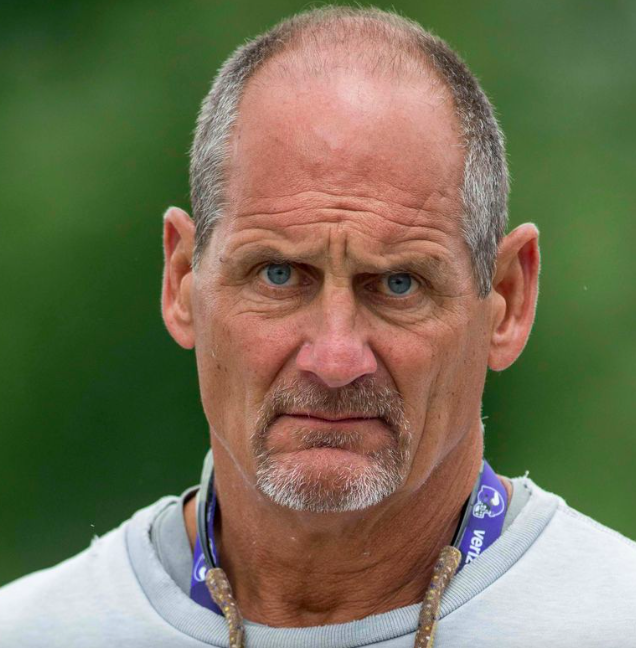
Scott Studwell (born August 27, 1954, in Evansville, Indiana) played linebacker at Illinois, where he recorded 177 tackles in 1976 and ranked second in career tackles behind Dick Butkus upon leaving college. Drafted in the ninth round in 1977 by the Minnesota Vikings, he spent his entire 14 year NFL career (1977–1990) with the team. As a middle linebacker, his primary role was to stop runs and lead the defense. Studwell set franchise records with 1,981 career tackles (regular season and playoffs), 230 in a single season (1981), and 24 tackles in one game (1985). He led the Vikings in tackles eight seasons and earned two Pro Bowl selections. He was named to the Vikings Ring of Honor in 2009 and listed among the 50 Greatest Vikings in 2010.
Studwell was known for his relentlessness and strong work ethic, traits that set him apart from other linebackers. He played with effort and heart, often credited as 90% effort and 10% technique. After retiring, he transitioned directly into a scouting and personnel role with the Vikings, serving from 1991 until April 2019, including over a decade as Director of College Scouting. In that role he helped identify talent like Randy Moss and Adrian Peterson. His long tenure as player and executive totaling 42 years with the Vikings speaks to his loyalty, football intelligence, and leadership both on and off the field.
Dave Duerson
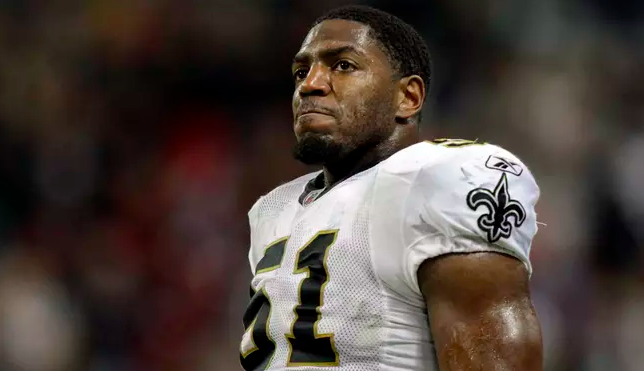
Dave Duerson (born November 28, 1960, in Muncie, Indiana) played safety in the NFL for 11 seasons, from 1983 to 1993. He was drafted in the third round by the Chicago Bears out of Notre Dame and spent seven years there, followed by one year with the New York Giants and three with the Phoenix Cardinals. His primary role was as a strong defensive back who could intercept passes, tackle runners, and occasionally rush the quarterback. Duerson earned four consecutive Pro Bowl selections (1985–1988), two second team All Pro nods (1986, 1987), and won two Super Bowls: Super Bowl XX with the Bears and Super Bowl XXV with the Giants. In 1986, he set an NFL record (for 19 years) with seven sacks by a defensive back and was named NFL Man of the Year in 1987.
Duerson was known for his athletic tackling, ability to read plays, and reliable coverage skills. He recorded 20 interceptions with 226 return yards, 16 sacks, and five fumble recoveries, showing versatility in stopping both the pass and run. After retirement, Duerson tragically died by suicide on February 17, 2011, in Sunny Isles Beach, Florida, from a self-inflicted chest wound. In a note he asked that his brain be donated for study. Neuropathologists at Boston University confirmed he had “moderately advanced” chronic traumatic encephalopathy (CTE), affecting brain areas tied to judgment, memory, impulse control, and mood. His case helped raise awareness of long-term brain damage risks in football.
Kevin Hardy
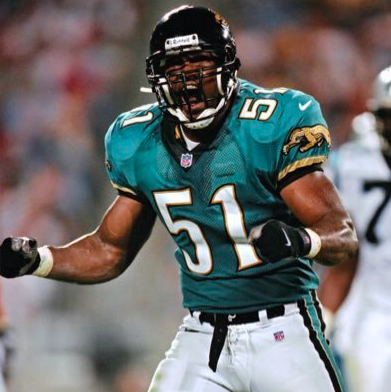
Kevin Hardy (born July 24, 1973, in Evansville, Indiana) played college football at Illinois, where he earned consensus First-Team All-Big Ten honors in 1994 and 1995, was a consensus First-Team All-American, and won the 1995 Dick Butkus Award. He finished college with 330 tackles, 18 sacks, and 38 tackles for loss, ranking among the school's top performers. Drafted second overall by the Jacksonville Jaguars in 1996, he spent 14 NFL seasons (1996–2004) playing linebacker across Jacksonville (six seasons), Dallas (one), and Cincinnati (three). As a linebacker, his primary role was to stop the run, pressure the quarterback, and cover the field. His standout skills included a powerful pass rush, he led AFC linebackers with 10.5 sacks in 1999, and consistent tackling, finishing with 740 total tackles, 36 sacks, five interceptions, nine forced fumbles, and seven fumble recoveries.
In 1996 he made the NFL All-Rookie Team, and in 1999 he earned Pro Bowl and First-Team All-Pro honors after a 97-tackle, 10.5-sack season. He set Jaguars franchise records for sacks (28.5) and stands fourth in team history in tackles (789). Known for his relentless effort and strong work ethic, he earned praise as a natural leader. He also gave back to his college by funding a linebacker scholarship at Illinois in 2005. His influence carried beyond the field: in 2023 he was inducted into the Indiana Football Hall of Fame and was later named on the ballot for the College Football Hall of Fame, cementing his status as one of the most respected linebackers of his era.
Ryan Kerrigan
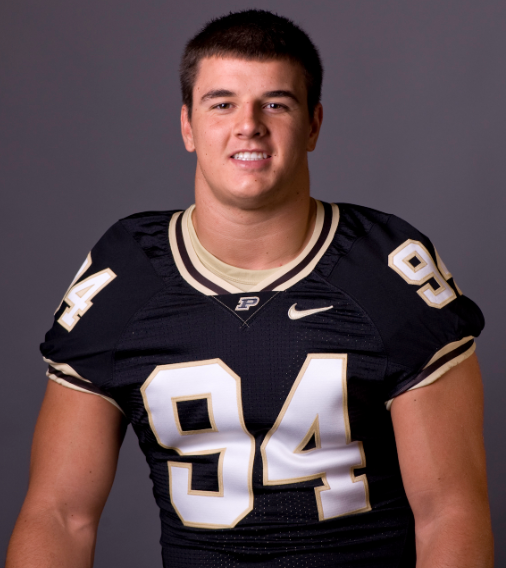
Ryan Kerrigan (born August 16, 1988, in Muncie, Indiana) played college football at Purdue, where he was a unanimous All American in 2010, won Big Ten Defensive Player of the Year, and set the FBS forced fumble record. He was drafted 16th overall in the 2011 NFL Draft by Washington and played 11 seasons (2011–2021), ten with Washington and one with the Philadelphia Eagles. As an outside linebacker (edge rusher), his primary role was pressuring the quarterback, tackling runners, and defending both pass and run. Known for his speed, strength, and relentless motor, he was an iron man, starting 139 straight games in his first eight seasons.
Kerrigan retired as Washington’s all time sack leader with 95.5 sacks, the franchise record for forced fumbles (26), and four Pro Bowl selections (2012, 2016–2018). He also led the NFL in forced fumbles in 2014 and tied for the franchise’s single season sack high with 13.5 sacks. Teammates and analysts praised him for consistency and leadership. As one Reddit fan put it:
“„“He’s always been a top 5 guy … The consistency is the most impressive part.” Another wrote: “He’s a legend, a great teammate, a mentor and fucking amazing at sacking the QB.” After retirement, he returned to Washington as an assistant linebackers coach and pass rush specialist, continuing his impact on the game.
Nick Hardwick
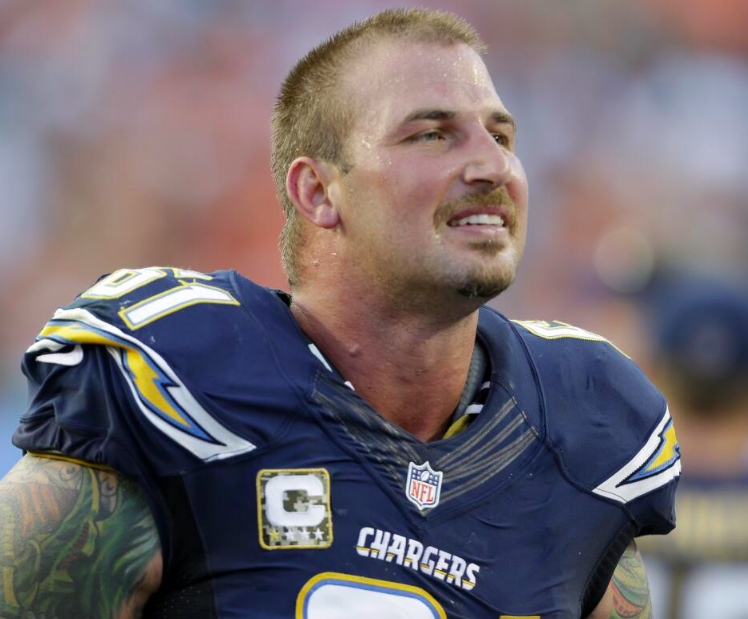
Nick Hardwick (born September 2, 1981, in Franklin, Indiana) played center in the NFL for 11 seasons (2004–2014), all with the San Diego Chargers. He was a third round pick (66th overall) by the Chargers in the 2004 NFL Draft out of Purdue, where he walked on as a defensive tackle before switching to center and earning Second team All Big Ten honors in 2003. His primary role was to anchor the interior line, protect the quarterback, and open running lanes, particularly for Hall of Famers Philip Rivers and LaDainian Tomlinson. Hardwick started every one of his 136 regular season games (plus postseason), earned a Pro Bowl nod in 2006 (and alternate selections four more times), was named Chargers’ Lineman of the Year twice, and was chosen for the franchise’s 50th Anniversary All Time Team.
Hardwick was praised for his toughness, intelligence, and technique, often outmatched in size yet successful thanks to effort, wrestling background, and strong film study habits. He served as team captain for five seasons and was recognized on field for his leadership and consistency. After a serious neck injury in 2014, he retired on February 2, 2015, following nerve damage affecting his hands and arms. He later returned to football as assistant offensive line coach for the Chargers in 2024, bringing his experience, work ethic, and mentorship back to his longtime team.
Jessie Bates III
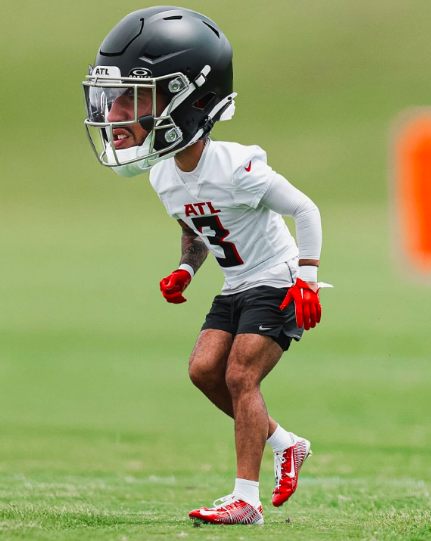
Jessie Bates III (born February 26, 1997, in Fort Wayne, Indiana) played college football at Wake Forest from 2015 to 2017. He was drafted in the second round (54th overall) by the Cincinnati Bengals in 2018, then in March 2023 signed a four-year deal with the Atlanta Falcons. As a safety, his primary role is to patrol deep zones, stop the run, defend passes, force fumbles, and support coverage. He played and started all 113 of his NFL games by 2024, known for his sideline to sideline range and ability to anticipate plays.
Bates’s standout skills include his high game awareness, speed (40-yard dash top 9 among safeties at Combine), ball-hawking, and tackling ability. He recorded 24 career interceptions, 64 pass deflections, 10 forced fumbles, and 713 tackles by 2024. He earned PFWA All-Rookie in 2018, was second-team All-Pro twice (2020, 2023), and made his first Pro Bowl in 2023. In Atlanta, he led the league in forced fumbles in 2023 and helped transform the defense through communication and mentorship. Known for his football intelligence and leadership, he is viewed as a trend-setting safety whose presence raises the play of teammates.
Jason Fabini
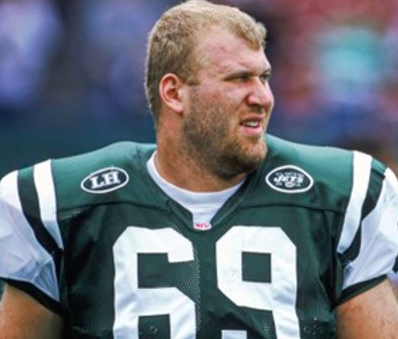
Jason Fabini (born August 25, 1974, in Fort Wayne, Indiana) played college football at the University of Cincinnati, where he was a four year starter at left tackle, earned three All Conference USA selections (1995–1997), and helped the Bearcats reach their first bowl in 47 years. Selected in the fourth round (111th overall) of the 1998 NFL Draft by the New York Jets, he played 11 NFL seasons: eight with the Jets (1998–2005), one with the Cowboys (2006), and two with the Redskins (2007–2008). As an offensive lineman (guard/tackle), his primary role was to protect the quarterback and open running lanes. Fabini started all 16 games as a rookie, earned PFWA All Rookie honors in 1998, started 129 games overall, and was named to the Jets Four Decade All Time Team.
Fabini was known for his toughness, versatility, and persistence. Despite his size (6′7″, 309 lb), he succeeded through effort, wrestling background, and strong technique, which helped the Jets allow just 20 sacks in 2000, among the NFL's best. He earned the Jets’ Ed Block Courage Award in 2000 after returning from a torn ACL. With the Redskins, he shifted to guard mid season in 2007 and started 13 games, drawing praise for adaptability and consistency. He was inducted into the University of Cincinnati Athletics Hall of Fame in 2009. Fabini was a strong leader and team first player who quietly anchored offensive lines through injuries and position changes, demonstrating both resilience and dependability.
Rod Woodson
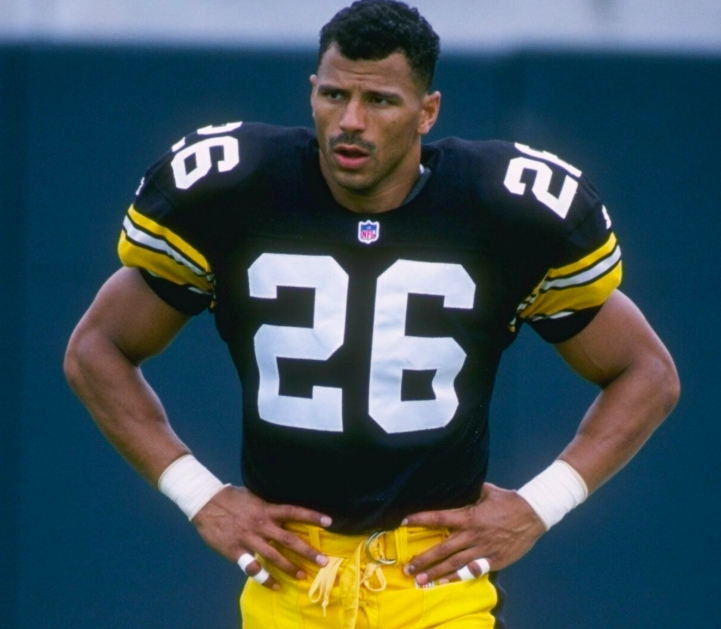
Rod Woodson (born March 10, 1965, in Fort Wayne, Indiana) played both cornerback and safety during his 17-season NFL career (1987–2003). He was drafted 10th overall in 1987 by the Pittsburgh Steelers after starring at Purdue, where he earned two-time consensus All-America honors (1985–86) and set multiple school records. In the NFL, his primary role was to cover receivers, defend against the run, force turnovers through interceptions and fumble recoveries, and contribute on special teams early in his career.
Woodson stood out with elite speed, ball hawking ability, and versatility, skills that made him equally effective at cornerback and safety. He holds NFL records for most interceptions returned for touchdowns (12) and fumble recoveries by a defensive player (32), ranking third all time in total interceptions (71) and first in interception return yardage (1,483). He was named NFL Defensive Player of the Year in 1993, selected First team All Pro six times, Second team All Pro three times, and chosen to 11 Pro Bowls. He won Super Bowl XXXV with the Ravens and was named to the NFL 1990s All Decade Team, NFL 75th and 100th Anniversary Teams, and the Steelers All Time Team.
Woodson’s legacy includes reshaping expectations for defensive backs through his playmaking range, turnover creation, and position flexibility, earning recognition as one of the greatest in NFL history and a first-ballot Pro Football Hall of Famer in 2009. Known as a strong leader, he was team captain in college and brought that presence into the pros. After retiring, he transitioned into broadcasting and coaching, notably serving as the Raiders’ cornerbacks coach in 2011 and more recently leading the XFL’s Vegas Vipers.
Alex Karras
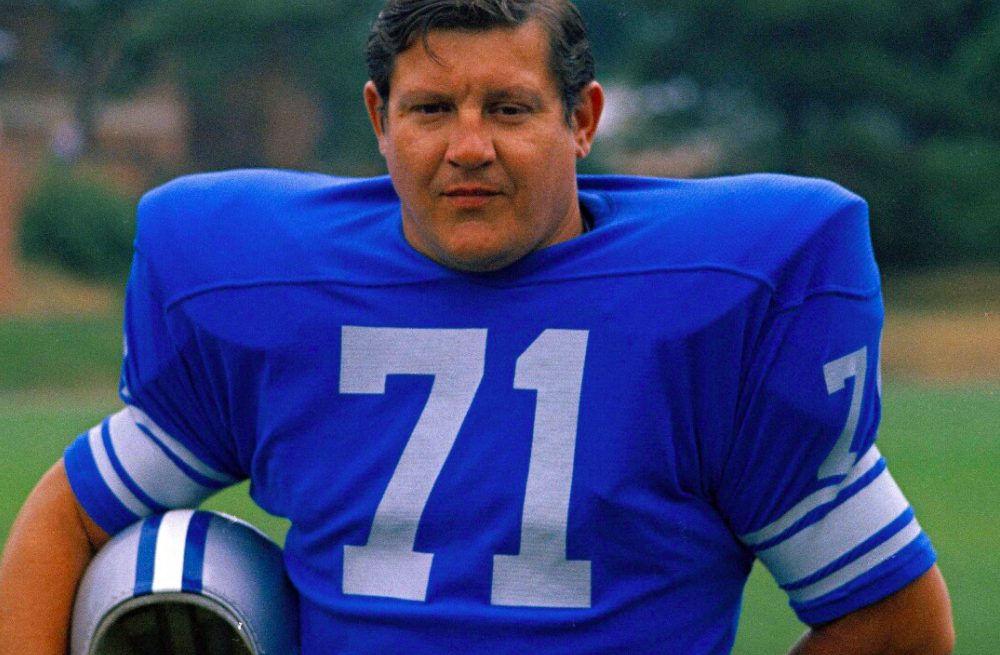
Alex Karras (born July 15, 1935, in Gary, Indiana; died October 10, 2012, in Los Angeles) played defensive tackle in the NFL, spending his entire 12-season career (1958–1962, 1964–1970) with the Detroit Lions. His primary role was to anchor the defense’s interior line, disrupt opposing quarterbacks, stop the run, and make plays in the backfield. Karras stood out for his rare blend of power, speed, and agility, nicknamed both “Mad Duck” and “iron man.” He used a versatile attack style with inside and outside moves, a bull head rush, and a shuffling counter that opponents described as “ballet,” making him unusually effective at his position.
Karras earned four Pro Bowl selections (1960–1962, 1965), was named First-team All-Pro three times and Second-team All-Pro six times, and made the NFL 1960s All-Decade Team. He won the Outland Trophy and was a consensus All-American at Iowa in 1957, finishing second in Heisman voting that year. His legacy includes reshaping expectations for defensive tackles with his combination of athleticism and technique, earning a place in the Pro Football Hall of Fame (2020 Centennial class), the College Football Hall of Fame (1991), the Lions Ring of Honor, and several all-time teams. As a team leader, he was known for his fierce competitive nature, resilience, including a return from a 1963 suspension, and unwavering presence on the field.
Karras also built a successful post-football career as a sportscaster on Monday Night Football, and as an actor known for his roles in Blazing Saddlesand sitcom Webster. He suffered from kidney failure, dementia, heart disease, and stomach cancer, and died at age 77. His family and advocates highlighted his life as a reminder of the long-term health costs of football and he was among the first former players to join legal action against the NFL over head injuries.
Chris Doleman
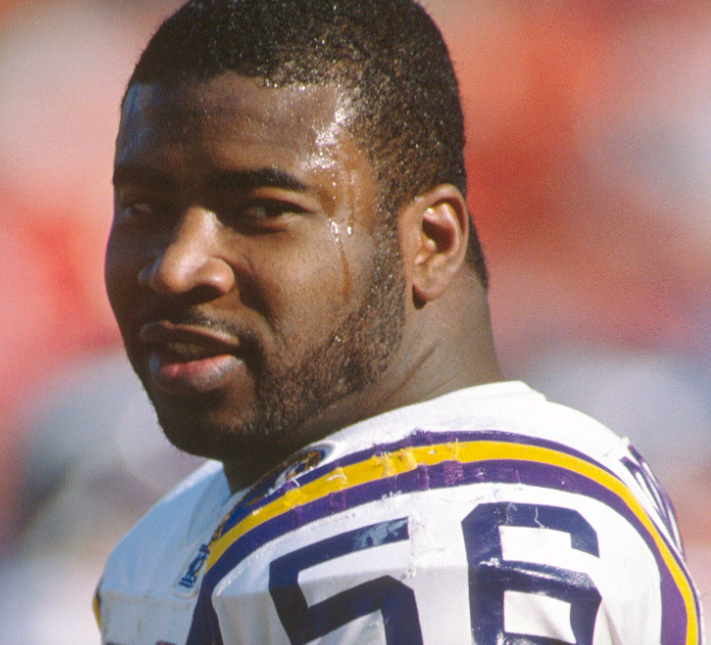
Chris Doleman (born October 16, 1961, in Indianapolis, Indiana; died January 28, 2020, in Duluth, Georgia) was a standout defensive end who played 15 seasons in the NFL, primarily with the Minnesota Vikings (1985–1993, 1999), and also with the Atlanta Falcons (1994–1995) and San Francisco 49ers (1996–1998). He was selected fourth overall in the 1985 NFL Draft out of the University of Pittsburgh, where he had 25 career sacks. Doleman’s primary role was to disrupt the quarterback, pressure the pass, and stop the run from the edge.
Doleman possessed rare athleticism for his size (6 ft 5 in, 289 lb), combining speed, strength, and quick moves, including a bull rush and shuffling counter, that made him a feared pass rusher. He totaled 150.5 career sacks (fifth in NFL history), led the league with 21 sacks in 1989 (a Vikings team record), and recovered 44 fumbles. Eight-time Pro Bowl selection, two-time First-team All-Pro, and member of the NFL 1990s All-Decade Team, Doleman entered the Pro Football Hall of Fame in 2012 and the Vikings Ring of Honor.
Doleman’s legacy lies in redefining the defensive end role with his combination of speed and power. He remained a model of consistency, recording at least ten sacks in eight seasons, and set a standard for edge rushers in future eras. He was known for his fierce competitiveness, ability to rally teammates, and quiet leadership in multiple locker rooms. After being diagnosed with glioblastoma in January 2018, he fought the aggressive brain cancer for two years before passing away in 2020 at age 58.
Bob Kuechenberg
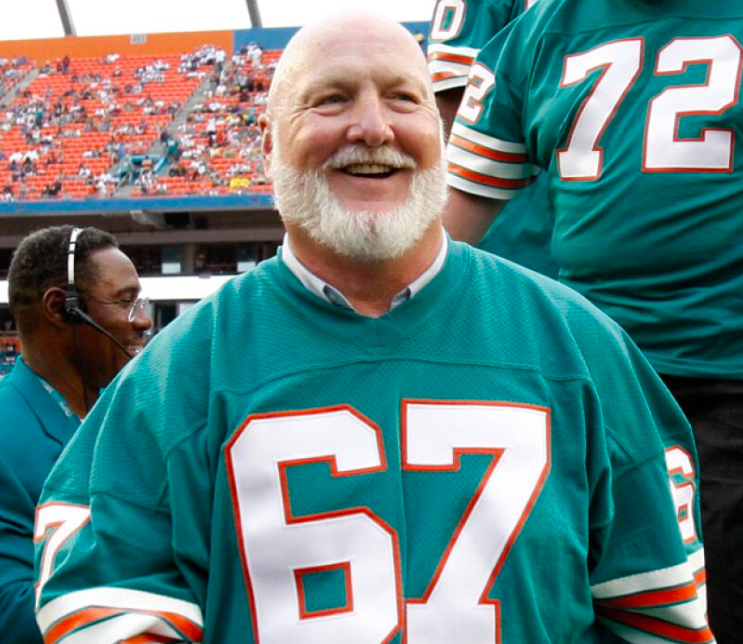
Bob Kuechenberg (born October 14, 1947, in Gary, Indiana; died January 12, 2019, in Fort Lauderdale, Florida) played guard in the NFL for 14 seasons (1970–1983), all with the Miami Dolphins, after being drafted in the fourth round (80th overall) of the 1969 NFL Draft by the Philadelphia Eagles and spending a season in a minor league. As a guard, his primary role was to anchor the interior line, protect the quarterback, and open running lanes, playing every snap in the Dolphins’ 17–0 1972 season and throughout their back-to-back Super Bowl wins (VII and VIII). He started 176 of 196 career games and earned six Pro Bowl selections (1974, 1975, 1977, 1978, 1982, 1983), two First-team All-Pro honors (1975, 1978), and one Second-team All-Pro (1977).
Kuechenberg was praised for his toughness, endurance, and advanced technique, earning a reputation for playing through a broken arm, ankle, and back injuries. He was a vocal leader, serving as team captain from 1980 to 1984, part of a dominant line with Hall of Famers Jim Langer, Larry Little, and Dwight Stephenson. He paved the way for two 1,000-yard rushers in 1972 and allowed just 20 sacks in 2000, one of the NFL’s top marks. Post-retirement, he was named to the Miami Dolphins Honor Roll (1995) and was a repeat finalist for the Pro Football Hall of Fame (2002–2009 and again in 2022). He was posthumously diagnosed with stage 4 CTE and died of a heart attack at age 71.
Ken Dilger
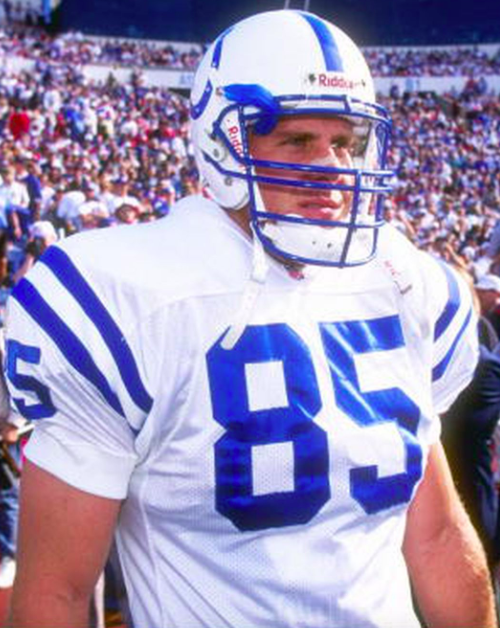
Ken Dilger (born February 2, 1971, in Mariah Hill, Indiana) played college football at the University of Illinois (1990–1994), where he was a four-year letterman and three-year starter at tight end. He earned All-Big Ten honors in 1994, setting a school record with six touchdown catches and totaling 48 receptions for 607 yards. Drafted in the second round (48th overall) of the 1995 NFL Draft by the Indianapolis Colts, Dilger played 11 NFL seasons, seven with Indianapolis (1995–2001) and three with Tampa Bay (2002–2004). His primary role combined pass-catching and blocking, supporting Colts’ explosive offense and later anchoring Tampa Bay’s Super Bowl XXXVII-winning attack.
Dilger stood out for his toughness and versatility, he could run seam routes with reliable hands and also dominate in blocking assignments. He accumulated 356 receptions, 4,099 yards, and 24 touchdowns in his career. In 2001, he earned his first and only Pro Bowl selection, becoming the first Colts tight end chosen since 1969. His leadership was evident early on as a team captain in high school, and he later gave back through his charity work, including a golf event and children’s foundation. His career culminated with a Super Bowl ring in Tampa Bay, and he was later inducted into the Indiana Football Hall of Fame in 2022.
Tyler Eifert
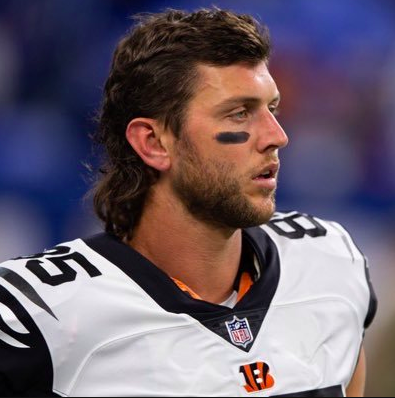
Tyler Eifert (born January 8, 1991, in Fort Wayne, Indiana) played college football at the University of Notre Dame (2009–2012), where he developed into a strong tight end. He set school records for career receptions (140) and receiving yards (1,840) by a tight end and won the 2012 John Mackey Award as the nation's top tight end. Drafted 21st overall in the first round by the Cincinnati Bengals in 2013, he signed a four-year rookie contract worth about $8.25 million. His primary role was dual: as a reliable pass catcher who could stretch the field vertically from both traditional tight end and slot alignments, and as an effective blocker in both the run and pass game for quarterbacks like Andy Dalton.
Eifert stood out with rare athletic traits for his position, towering at 6′6″ with 4.6 second speed and a 35 inch vertical leap. He was praised for his precise route running, contested catch ability, and adaptability in different formations. His 2015 season was a career high: Pro Bowl selection with 52 catches, 615 yards, and multiple touchdowns, and he shared the Bengals' single-season tight end touchdown record with nine. However, injuries limited him, he played only eight games over two seasons before signing with Jacksonville in 2020, where he played a full 16-game season and added value with 43 catches for 436 yards and three touchdowns.
Jaylon Smith
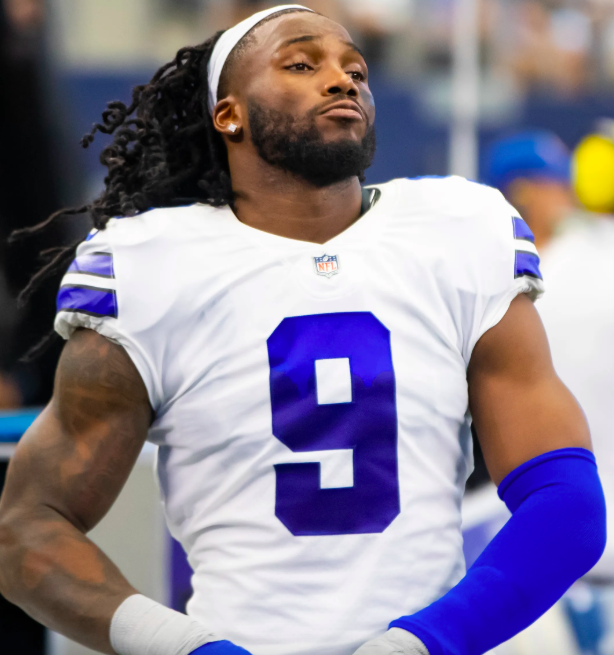
Jaylon Smith (born June 14, 1995, in Fort Wayne, Indiana) played linebacker at Notre Dame. He was a standout in college, earning the Butkus Award in 2015 as the nation's top linebacker before suffering a severe knee injury in the Fiesta Bowl. Drafted 34th overall by the Dallas Cowboys in 2016, he missed his entire rookie season recovering from the injury. Smith made his NFL debut in 2017 and quickly established himself as a key player. As an outside and inside linebacker, his primary role was to stop the run, pressure the quarterback, cover passes, and anchor the defense.
Smith stood out for his rare athleticism, elite speed, quickness, and range, earning comparisons to skill-position players. His stats include 626 career tackles, 11 sacks, six forced fumbles, two interceptions, and nine passes defended through 88 games. He reached a career peak in 2019 with 142 tackles and a Pro Bowl selection. Smith has played for the Cowboys (2017–2021), Packers, Giants, Raiders, and Steelers, and as of May 2025, is rejoining the Raiders after a strong rookie minicamp tryout.
Smith's legacy lies in his comeback from a career-threatening injury and his role in expanding the modern linebacker position through exceptional speed and versatility. He has earned respect for his leadership, serving as team captain for the Cowboys and Giants, and for his competitive fire in pivotal moments. Known for his intelligence and physical play, he is described as the "quarterback of the defense." Off the field, he founded the Minority Entrepreneurship Institute, hosts a youth football camp, and was nominated for the 2020 Walter Payton Man of the Year Award.
Steve Weatherford
Steve Weatherford (born December 17, 1982, in Crown Point, Indiana) was an NFL punter active from 2006 to 2015. An undrafted free agent out of the University of Illinois, he played for five teams: Saints, Chiefs, Jaguars, Jets, and Giants, spending his prime years (2011 to 2014) with the New York Giants. His primary role was punting, but he also served as the holder on field goals and extra points, requiring precision coordination with the kicker.
Weatherford’s standout skill was his powerful and accurate punting, exemplified during Super Bowl XLVI when he pinned the New England Patriots inside their 10-yard line three times, a Super Bowl record, and consistently shifted momentum through field position control. At 6'2" and 210 lb with only 5% body fat, he was praised as the strongest pound-for-pound player, squatting 475 lb and benching nearly 400 lb. On top of athleticism, he was known as a lively leader in the locker room, energetic on sideline celebrations, and dependable under pressure, most notably handling a tough snap in the NFC title game that helped set up the winning field goal.
He earned the franchise tag from the Giants in 2012, averaged over 46 yards per punt, and was recognized for pinning 211 punts inside the 20-yard line over his career. Off the field, Weatherford became a fitness role model, motivational speaker, and advocate for mental health, openly sharing his battles with post-Super Bowl depression. His charity efforts through the Steve Weatherford World Champion Foundation benefited thousands of youth, earning him the World of Children Advocacy Award in 2015. He retired after his 2015 release and has since focused on fitness, broadcasting, entrepreneurship, and family life.
Don Hansen
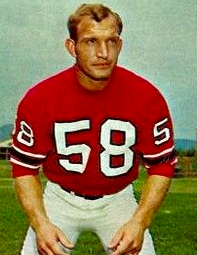
Don Hansen (born August 20, 1944, in Millersburg, Indiana) played college football at the University of Illinois, earning First-Team All-Big Ten honors in 1965 and helping the team to a Rose Bowl win in 1963. He was drafted in the third round, 42nd overall, by the Minnesota Vikings in the 1966 NFL Draft (also selected in the seventh round of the AFL Draft by Miami) and played as a linebacker from 1966 to 1977 across four teams: the Vikings, Falcons, Seahawks, and Packers. His primary role was defending against the run, covering short passes, and making tackles; over his 12-year career he appeared in 142 games (113 starts), recorded 10 interceptions for 123 return yards, and recovered 14 fumbles.
Hansen stood out for his toughness and resilience, earning a reputation as a hard-hitting, reliable defender who exceeded expectations. He was named Minnesota’s Rookie of the Year in 1966 and Atlanta’s Player of the Year in 1972. Known as a team player, he anchored the defense and provided consistent performance, though he did not receive Pro Bowl or All-Pro honors. He was inducted into the Indiana Football Hall of Fame in 2014, reflecting his strong impact on the field and lasting legacy in Indiana football.
Gerald Irons
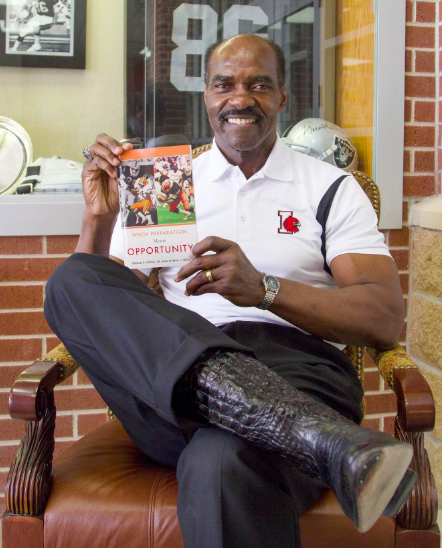
Gerald Irons (born May 2, 1947, in Gary, Indiana; died April 1, 2021, in The Woodlands, Texas) was a linebacker who played ten seasons in the NFL (1970 to 1979) with the Oakland Raiders and Cleveland Browns. Drafted in the third round (76th overall) in 1970 from the University of Maryland Eastern Shore, where he earned All-Conference honors and was team captain, he became a consistent starter from 1972 onward. His primary role was stopping the run, covering short routes, and forcing turnovers; over his career he recorded 13 interceptions (178 return yards, one touchdown), three fumble recoveries, and played in 135 games with 98 starts.
Irons stood out for his toughness, intelligence, and athleticism; he was a hard-hitting defender with reliable instincts. Though he did not earn Pro Bowl or All-Pro honors, he received honorable mention All-AFC selections (1973 to 1975), was voted Minnesota’s Rookie of the Year equivalent by the Raiders in 1970, and Atlanta’s Player of the Year by reports in 1972 after his trade. His post-playing life was marked by service: earning an MBA and law degree during his career, he later worked for 32 years at The Woodlands Development Company and served 22 years on the Conroe ISD Board, where a junior high school is named in his honor. He was named to the Indiana Football Hall of Fame in 2013, listed among the 100 greatest Browns, and recognized as an “Oakland Raiders Legend.” Irons died from complications of Parkinson’s disease at age 73.
Paul Flatley
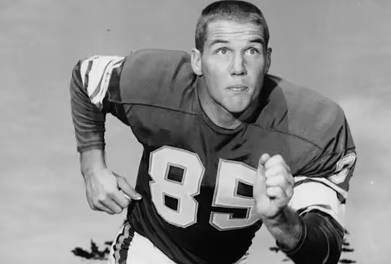
Paul Flatley (born January 30, 1941, in Richmond, Indiana; died March 15, 2025, from sepsis) was a wide receiver who played eight NFL seasons (1963 to 1970), five with the Minnesota Vikings and three with the Atlanta Falcons. After playing halfback in high school at Richmond, he switched to flanker at Northwestern, earning Third team All American and Second team All Big Ten honors in 1962. Drafted in the fourth round (44th overall) of the 1963 NFL Draft, Flatley’s primary role was catching passes and gaining yards, including deep routes and reliable third down receptions.
Flatley’s standout skills included smart route running, strong hands, and game awareness. As a rookie, he started all 14 games, caught 51 passes for 867 yards (an NFL rookie record for the Vikings) and four touchdowns, earning the 1963 AP NFL Rookie of the Year award. He was named to the Pro Bowl in 1966 and played a key role in the Vikings’ first 200 yard receiving game in 1965 with seven catches for 202 yards and two touchdowns. Over his career, Flatley recorded 306 receptions, 4,905 yards, and 24 touchdowns, retiring in 1970; he earned inductions into the Indiana Football Hall of Fame (1978) and Chicagoland Sports Hall of Fame (2011).
After retiring, Flatley became a long time color commentator for Minnesota Golden Gophers radio broadcasts (1971 to 1997) and business owner. His competitive nature, preparation, and leadership made him a trusted teammate and broadcaster. He passed away at age 84 due to sepsis.
Maurice Douglass
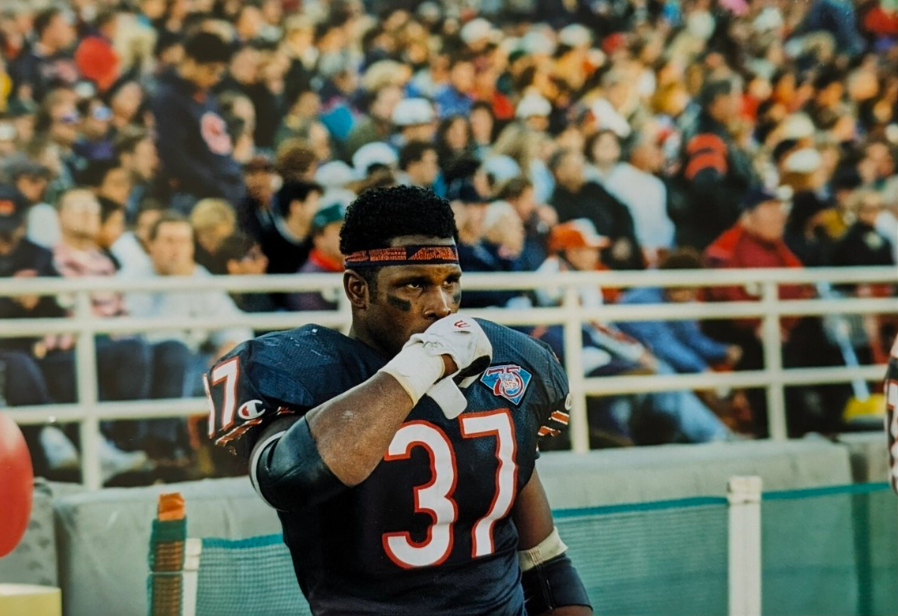
Maurice Douglass (born February 12, 1964, in Muncie, Indiana) played safety and nickelback in the NFL for 11 seasons (1986 to 1996), spending most of his career with the Chicago Bears and later two seasons with the New York Giants. His primary role was to provide depth in the secondary, cover tight ends and slot receivers, and excel on special teams. He recorded 274 tackles, six interceptions, 12 fumble recoveries, and contributed in 139 games with 16 starts.
Douglass was praised for his toughness, versatility, and aggressive style of play. He started nine playoff games and made a key interception in the 1988 playoffs to help secure a win over Philadelphia. He earned honorable mention All AFC honors from 1993 to 1995. Though not a headline player, he was recognized for stepping in reliably across multiple roles, helping shape the Bears’ secondary in their defense heavy era. After retiring, he returned to Ohio as a high school coach and earned his college degree at age 59.
Latest Articles
Popular Articles